
Machinery
A modern, automated machine park with capacity for both precision engineering and heavy milled components. The data below is a selection of our machinery.
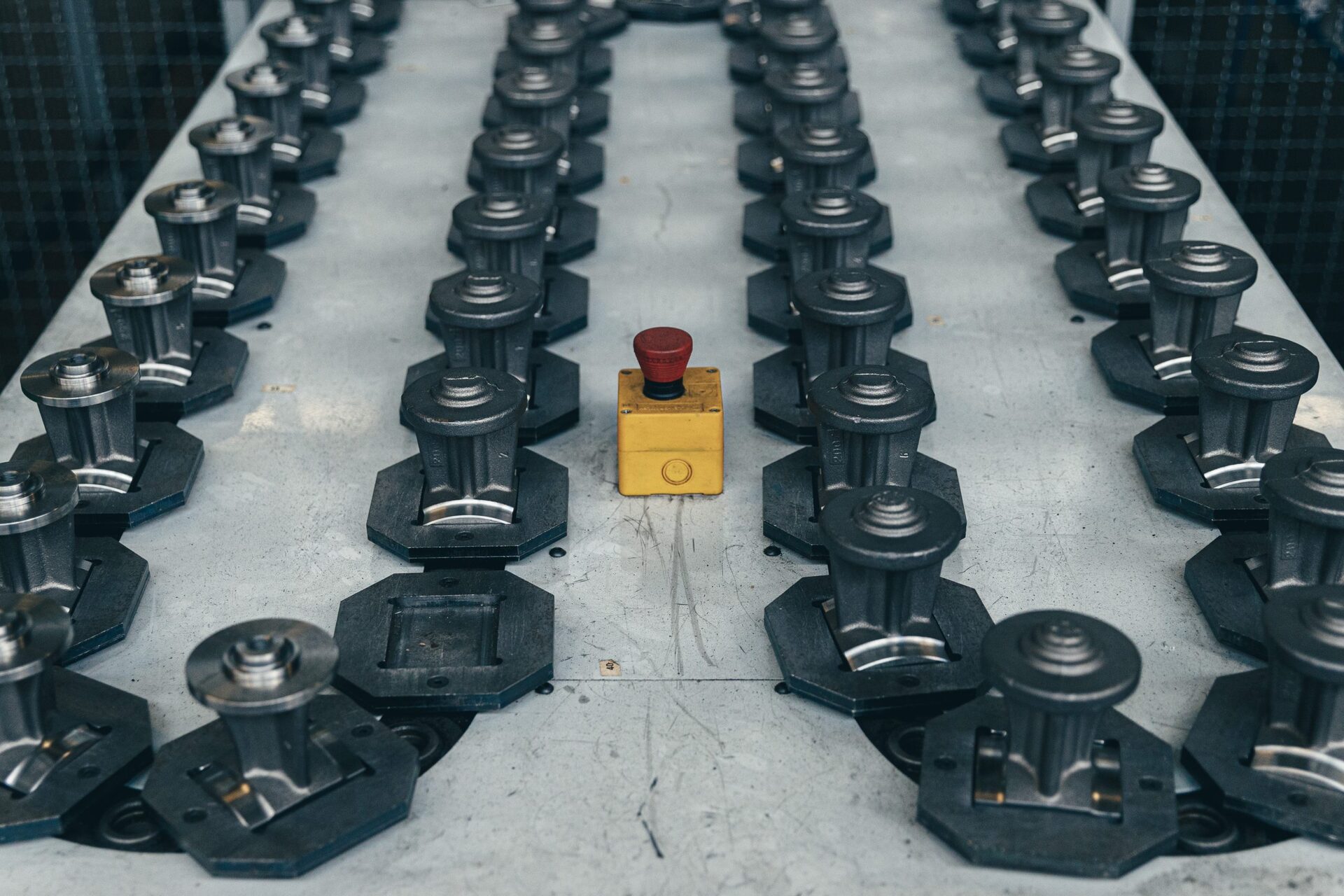
Robot cells and automated component handling
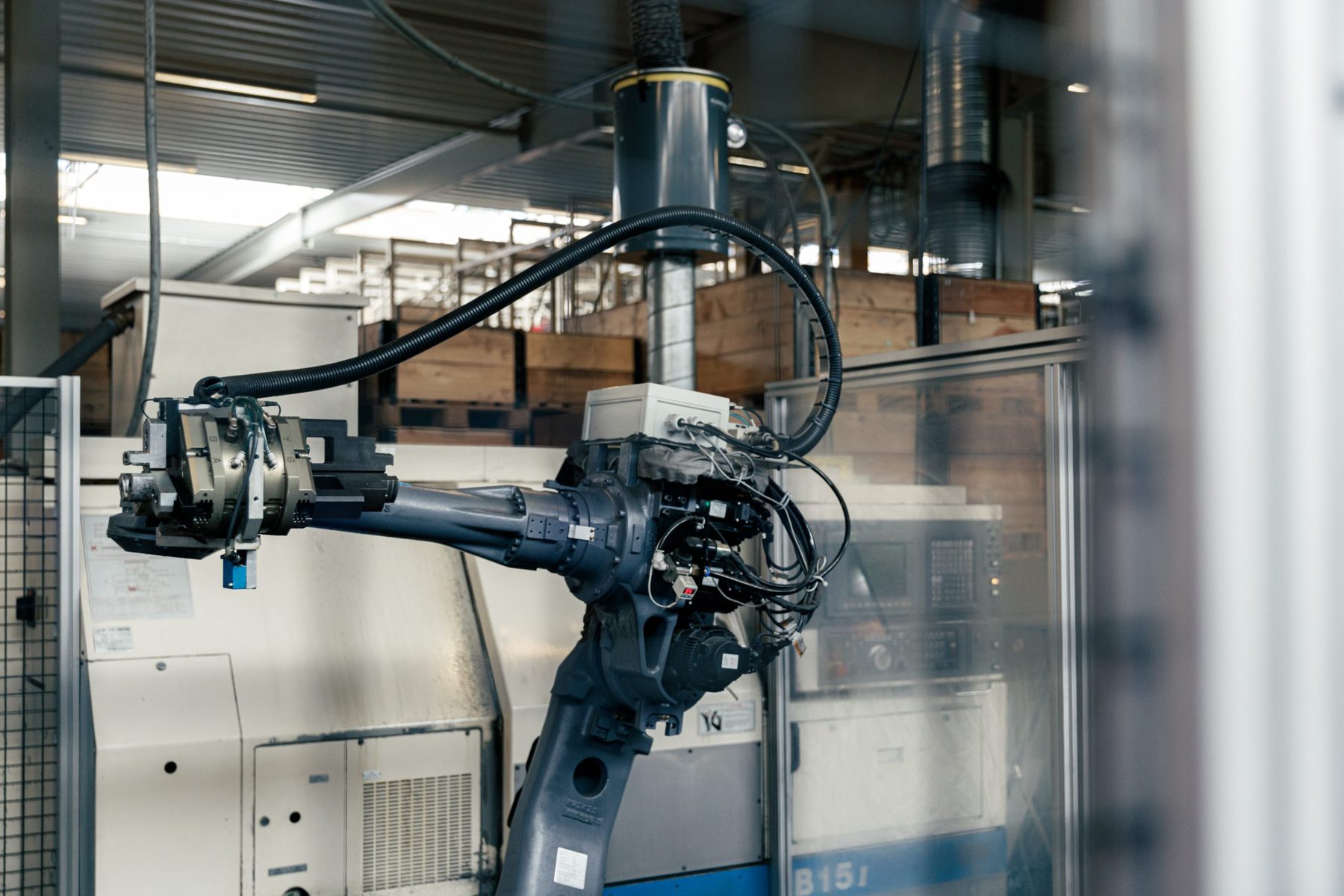
A significant part of our machine fleet is operated by robot cells that fetch raw blanks, position them in the machine and remove the finished components again without manual intervention. The robot cells are adapted to the individual task with grippers matching the geometry of the component, so that handling can take place safely and consistently throughout a long production run without interruption.
The benefit of robotic operation is not only capacity outside normal working hours. It is also that the component is handled in exactly the same way every time, which eliminates the variation that can otherwise arise when several operators take turns running the same machine across shifts.
We tailor the programming of the robot cells to each new task before a batch is released for unmanned operation. This means that a new setup always goes through a controlled run-in, during which gripping sequence, cycle time and error handling are tested before the machine is left unsupervised.
Bar magazines and unmanned operation
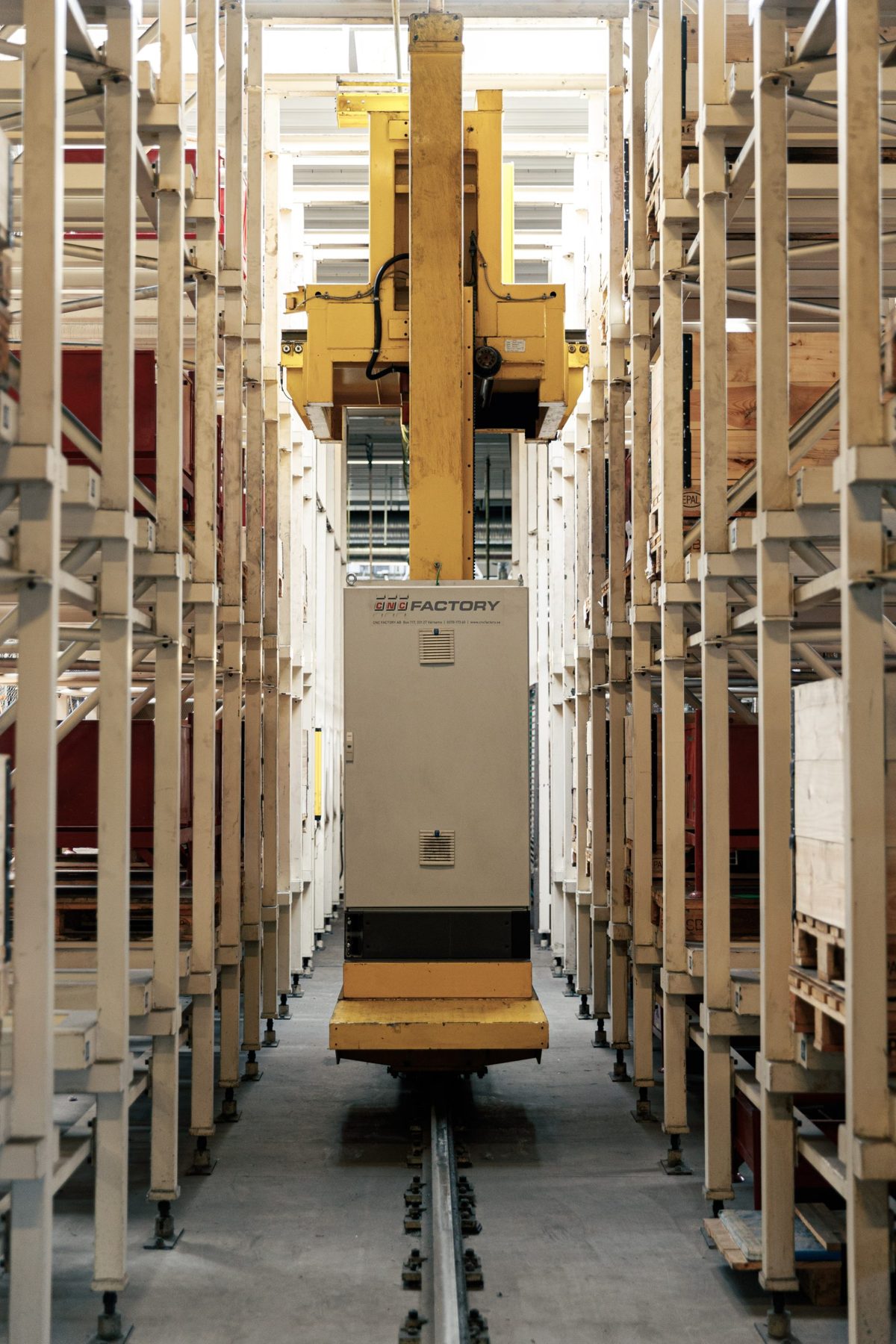
Bar magazines make it possible to load several metres of raw material into the machine at a time, so that the turning process can continue through an entire night shift without anyone needing to change the bar material along the way. This is one of the key conditions that allow us to maintain a competitive unit price on components produced in large batches.
The magazines are sized for the bar lengths and diameters we typically work with, from the slender components used in sliding-head turning to the heavier components in conventional CNC turning. Changes between material types and dimensions are planned so that the magazine is loaded with the correct bar before an order is started.
Unmanned operation places demands on monitoring. The machines are connected to systems that register stoppages, tool breakage and deviations, so that a fault does not continue unchecked through the night but is caught and halts the process until an employee can take over at the next shift change.
Measuring equipment integrated close to production
Our 3D measuring equipment is located close to the machines, so that a component can be measured quickly, without a long journey to a separate measuring room. This shortens the time from when a suspicion of a deviation arises until it is either confirmed or ruled out, and it makes it possible to respond while the process is still set up and ready for adjustment.
For large batches, sample checks are supplemented with ongoing measurements that are fed into a statistical process. This gives a picture of how the process moves over time, rather than just a snapshot, and makes it possible to intervene before a trend develops into an actual deviation.
The measuring equipment is maintained and calibrated according to a fixed schedule, so that results remain reliable year after year. Calibration documentation forms part of the quality system and can be presented whenever a customer wishes to see how our measurements are assured.
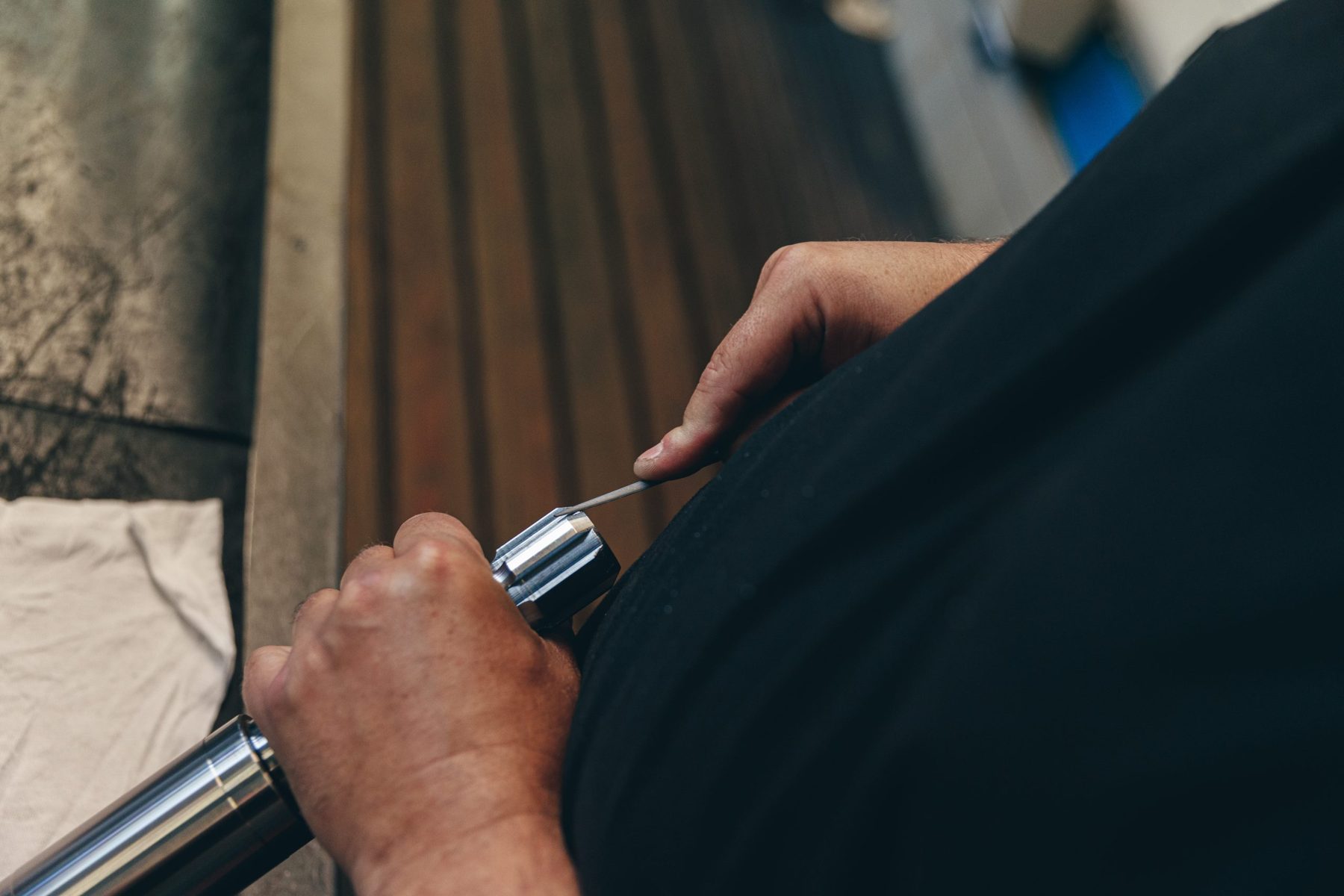
Tool management and cutting data
Every tool used in production is registered with its own cutting data, expected service life and the operations it is used for. This makes it possible to track a tool's wear throughout a batch and plan replacement before it affects surface quality or the tolerance of the component.
Cutting data is determined on the basis of material, geometry and the surface quality the task requires, and is continually adjusted based on experience from similar components. This is one of the details that is rarely visible to the customer, but which has a major impact on both unit price and stability in a long production run.
In unmanned operation, tool management is a prerequisite for a setup to be released without supervision. The system must be able to detect when a tool is approaching the end of its service life and either change it automatically or stop the process in a controlled manner, rather than continuing with a tool that is becoming worn.
All machines
Hitachi Hitec Turn20SH
Mori Seiki SL-35B
Okuma LB15
Okuma LB15 II-M
Okuma LB300-M 1000
Okuma LB300-M 500
Okuma LB3000-EX 1000
Okuma LB3000-EX Space Turn
Okuma LT 2000
Schaublin 110 CNC M
YCM NT-2000SY Ø50
YCM NT-2000SY Ø60
Okuma LB15-M
Kuka robot
Okuma LB300-M Space Turn
Kuka KR45
Vturn-LVT300-M
Schaublin 65 TM-3Y
Schaublin 65 TM-6Y
Okuma MX45 VA
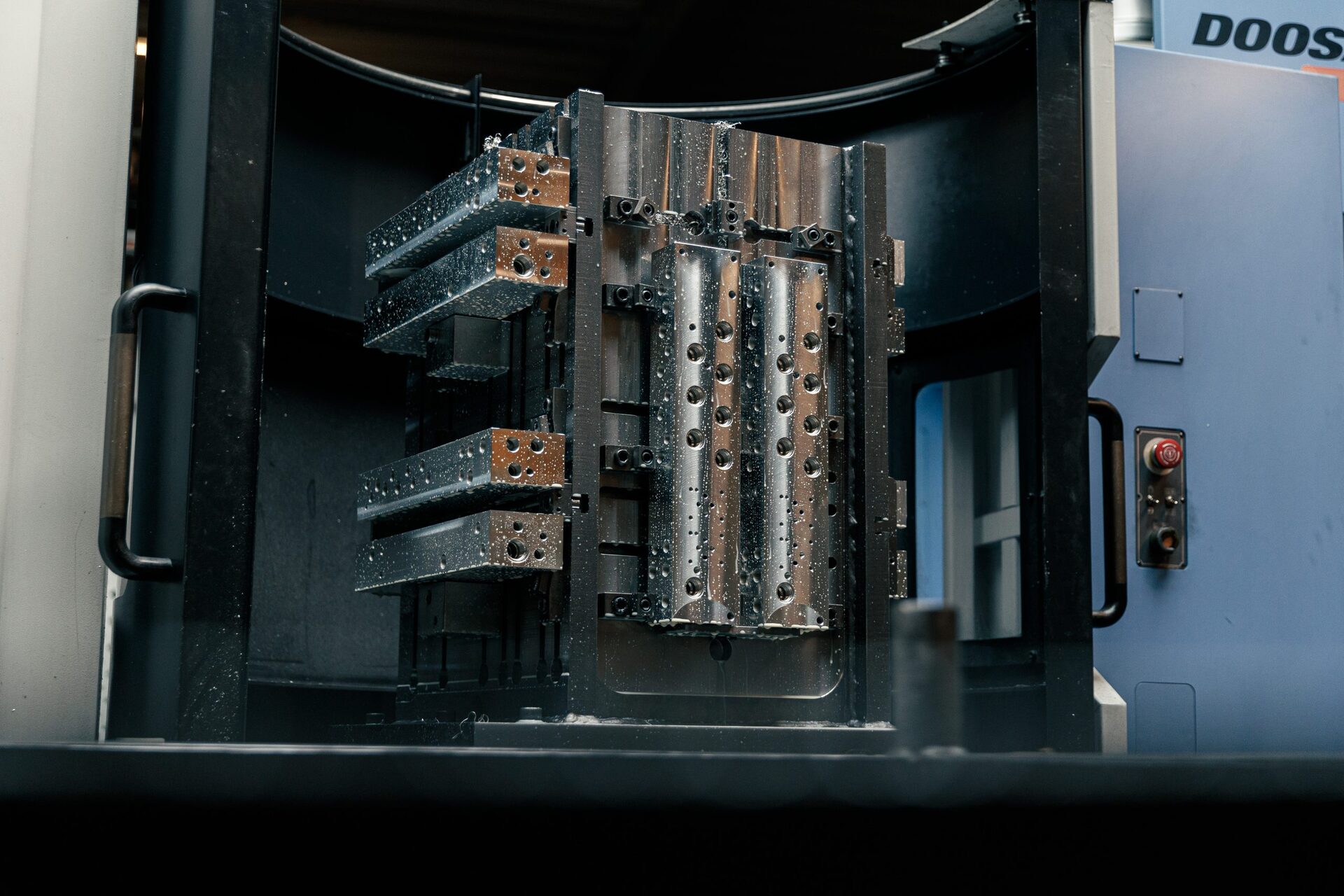
Doosan HM6300
7 paletter, 650 × 650
Niigata HN50B
3 × HN500 i FMS m/ 48 paletter
Gildemeister GD20
Gildemeister GD32
Maier ML 26C
Macturn 250W M
ladebord/stanglader
Multus U3000
Manurhin Fanuc Tape Center D
Okuma MX45 VAE
Supermax YCM-65A
YCM-85A
YCM NXV1020
YCM NXV1680
DoAll C3028NC
DoAll C4020NC
Continuous investment
We continuously invest in automation and measuring equipment to maintain capacity, quality and competitiveness. Contact us for a complete, up-to-date machine list.
Continuous investment and upgrading
The machine fleet is continuously updated as the nature of customers' tasks changes and new technologies make a process faster, more precise or more energy efficient. Decisions on new machines are made on the basis of specific types of tasks, not as general capacity expansions without a clear application.
When a new machine is brought into use, it goes through a run-in period during which accuracy, repeatability and cycle times are verified before it is set to produce customer components in earnest. This ensures that new investments live up to the standard customers already know from us.
Older machines are phased out or moved to tasks where their capacity still fits well, rather than being replaced solely because of age. The decision is made on the basis of the machine's condition, accuracy and the type of tasks it can still handle at a competitive level.
Safety and working environment around the machines
Robot cells and automated setups are fenced off and fitted with the safety systems required to allow employees to move safely around production while the machines are running. Access to the active working area automatically interrupts the machine's movement, minimising the risk of personal injury.
Noise, chip handling and cooling lubricants are all factors that form part of our ongoing work on the working environment around the machine fleet. We work systematically to improve conditions where employees spend the most time closest to the machines on a daily basis.
New employees are given thorough training in safety procedures before working independently at a machine, and there are fixed routines for how an irregularity or a near-miss should be reported and followed up internally.
Energy consumption and efficient machine utilisation
High utilisation of machine time through unmanned operation and automation means that a given amount of energy is used to produce more components, compared with a machine fleet that only runs during normal working hours. This is one of the ways we work to keep energy consumption per component down.
We continually assess whether newer machine types can reduce energy consumption for the same processes without compromising accuracy or capacity. Decisions on replacement therefore weigh function, capacity and operating economy against each other.
Preventive maintenance also contributes to energy efficiency, because a machine in good condition runs more stably and uses less energy compensating for wear than a machine that is pushed beyond its normal maintenance cycle.
Shall we produce something for your company?
Send us your drawing and we will come back with a technical assessment and a quotation. We accept electronic drawings in most formats and treat all material confidentially.