
Construction and equipment industry
Components for construction machinery, cranes, lifts, lifting gear and equipment manufacturers, where strength, wear resistance and reliability are at the core.
- Parts that withstand impact, wear and high loads
- Hardened and treated surfaces where there is contact
- Accurate bolt holes and mating faces in large parts
- Material traceability on load-bearing parts
- Delivery reliability on both series and spare parts
Large and heavy parts
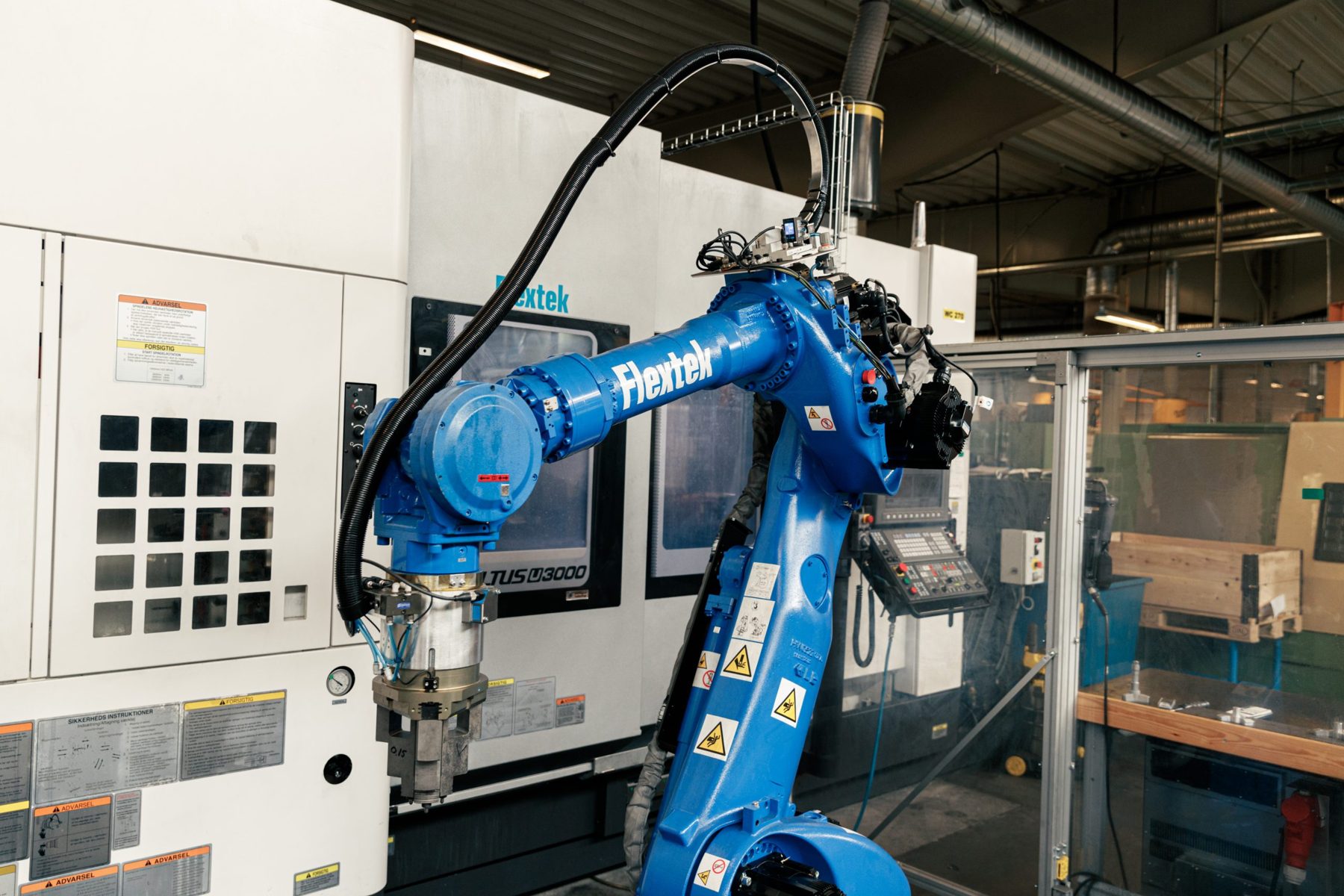
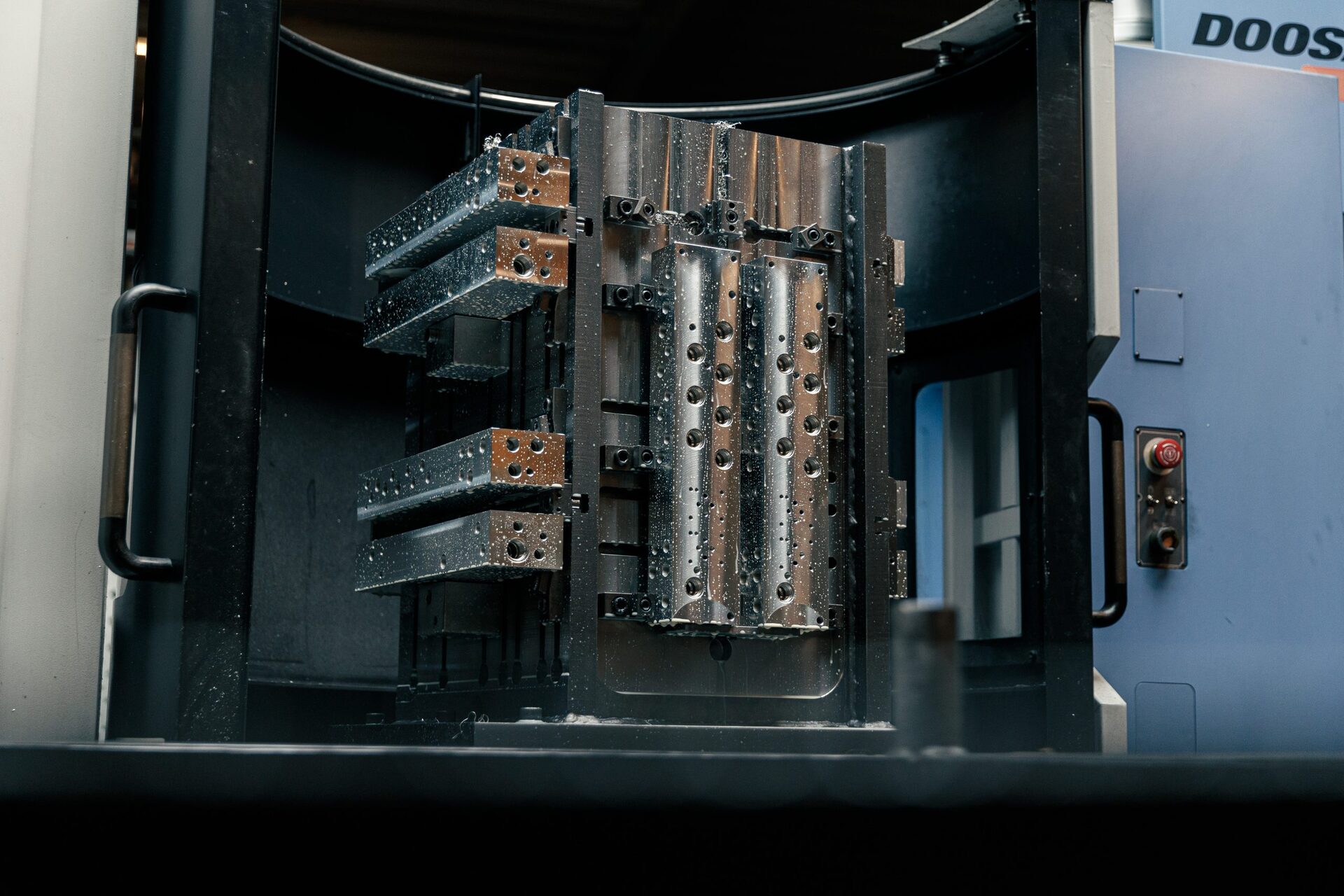
Turning up to ø400 mm and horizontal milling on Doosan and Niigata centres with 650×650 mm pallets mean we can take the larger, heavier parts that load-bearing structures require, without compromising tolerances on mating faces and bolt holes.
Wear resistance through treatment
Hardening, nitriding, delta coating and painting are coordinated through established Danish partners, so the component is delivered fully treated. We plan machining with the treatment in mind, so dimensions and tolerances hold after heat treatment rather than moving along the way.
Spare parts that fit first time
Equipment has a long service life, and spare parts must fit machines built years ago. We archive programs, fixtures and measurement plans, so a repeat run produces a part identical to the original and fits without adjustment in the field.
Operating environment: outdoor, harsh and unpredictable
Construction machinery, cranes and lifting equipment work outdoors all year round, in dust, sleet, frost and direct sunlight, often on building sites where cleaning and maintenance are limited. Components must therefore be able to withstand a combination of mechanical loading and a harsh outdoor environment, without surface treatment or fits failing after a short period of operation. We select materials and finishes with that outdoor environment in mind, not only the calculated load.
The machines are often used by different operators who do not necessarily handle the equipment in the same way, making the loads less predictable than on a fixed production line. We therefore build a safety margin into how we interpret a drawing where relevant, and we flag it if we see a detail that could become a weak point under rough handling in the field.
Salt from road de-icing in winter and moisture from rain and condensation are a regular part of daily life for equipment that works outdoors. We recommend surface treatment where ordinary structural steel is not sufficient, and we coordinate that treatment through established Danish partners, so that the component does not begin to rust before its calculated service life has been reached.
Materials for impact and fatigue
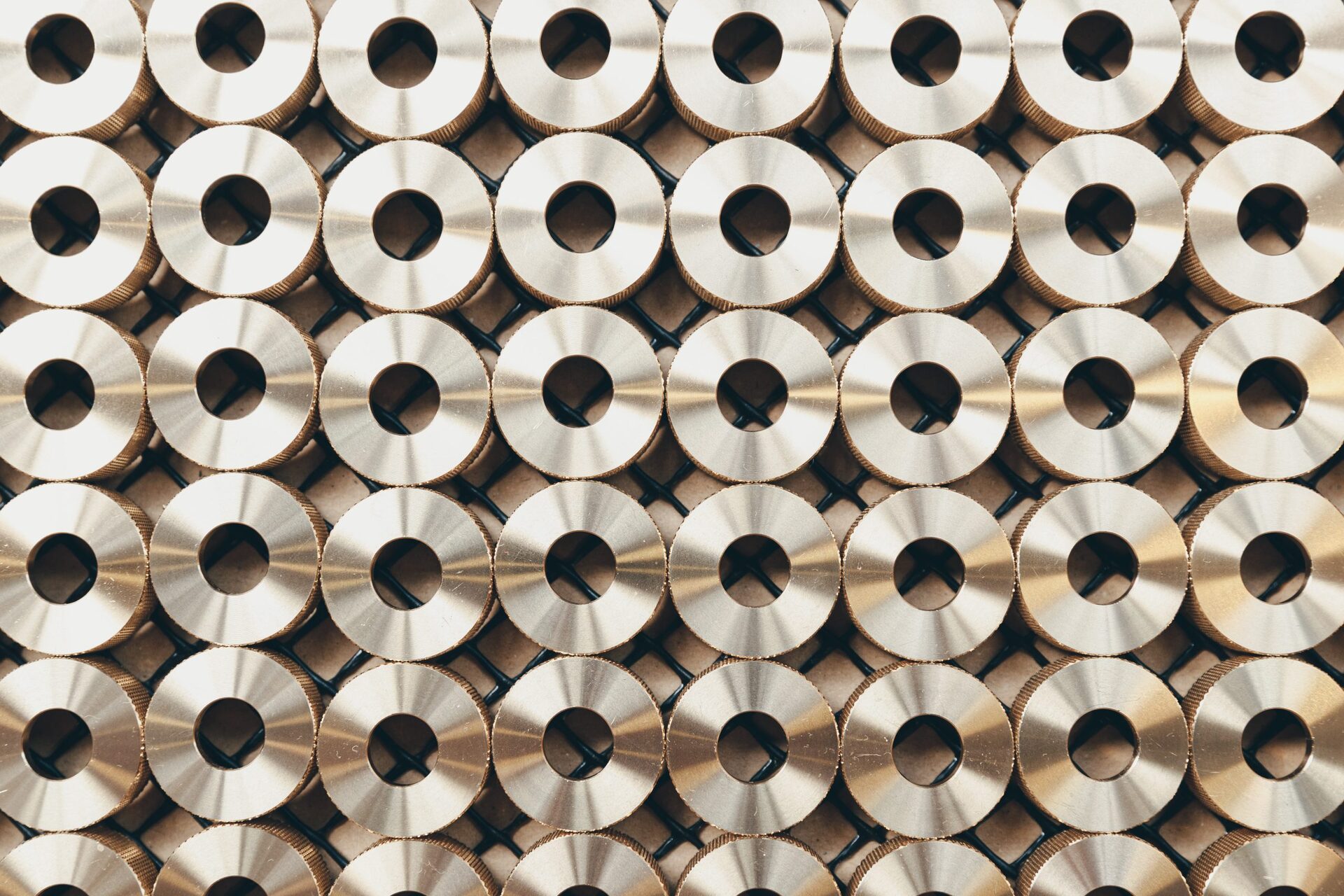
Load-bearing parts for construction machinery are typically made from tough structural steel or alloy steel, chosen to withstand impact and fatigue without becoming brittle. We know the cutting data that give a clean cut in these materials without creating residual stresses that could later be released as deformation or cracking under load in the field.
Hardening and nitriding steels are used for wear surfaces, where two parts slide or roll against each other, such as bearing surfaces, bolts and guides. We plan the machining so that the workpiece is correctly prepared for heat treatment, with the right stock allowance and the right surface preparation, so that the result after hardening is a surface that holds both dimension and hardness at the same time.
For fittings and parts that are to be welded into a larger structure, we take weldability into account in both the material choice and the geometry we produce. A mating surface that is to be welded fast requires a different approach from one that is to be bolted, and we readily discuss that difference with the customer's designer before machining begins.
Tolerances on large and heavy workpieces
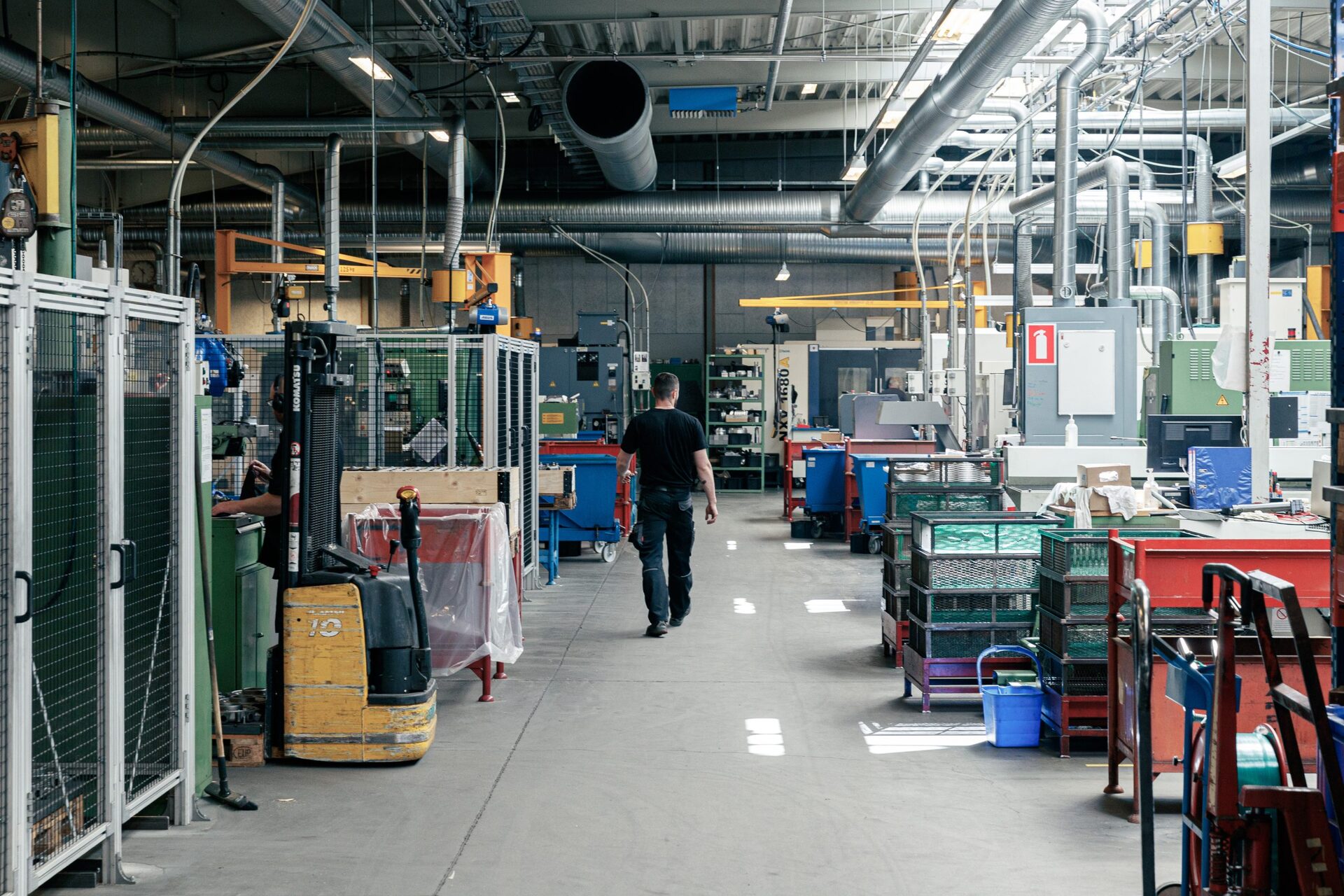
Large, heavy workpieces such as swing arms, brackets and bearing housings often have critical dimensions positioned far apart on the part, which makes it harder to hold tolerance than on a small component. We use horizontal milling on Doosan and Niigata centres with large pallets for exactly this type of workpiece, where rigidity in the fixturing is essential to ensure that bolt holes and mating surfaces end up in the correct relative position.
Bolt holes for load-bearing connections must fit without the joint being incorrectly preloaded when the component is mounted in a larger steel structure. We check positional deviations on 3D measuring equipment, not just the individual diameters, because it is the combined positioning of several holes that determines whether a flange or bracket can be mounted without having to be pressed or filed into place.
Turning up to ø400 mm covers the shafts, bushes and bearing parts that equipment manufacturers typically work with, and we keep tolerances on mating surfaces and threads consistent across the full diameter range. This is an advantage for customers who need both smaller and larger parts from the same supplier, without quality varying with size.
Wear and inspection in the field
Wear resistance is often the property that determines how long a part lasts between two inspections on a piece of construction machinery. In addition to material choice and heat treatment, surface finish plays a role, because a surface that is too rough wears faster under repeated movement. We adapt finish according to function, so that a mating surface with relative movement receives a different treatment from a surface that only needs to bolt in place.
Lifting equipment and cranes are subject to regular statutory inspection, where wear limits on load-bearing parts are defined in advance. We can manufacture spare parts identical to the originals, so that a component can be replaced without altering the machine's approved design, which is a prerequisite for the machine to continue operating after an inspection.
We often see the same type of wear damage recur on a component used under similar conditions, and we use that experience to suggest small adjustments when the customer is open to it: a larger radius, a different hardening depth or a changed surface treatment that extends the time between replacements without changing the machine's function.
- ISO 9001 certified quality management since 2015
- 3D measurement of parts and measurement reports as documentation
- Traceability at batch and part level
- Material certificates on load-bearing parts by agreement
If you have questions about this content, please contact us at salg@rmfintech.dk.
Documentation on load-bearing parts
Load-bearing parts for cranes, lifts and construction machinery often require material certificates and traceability, because a failing component in this category can have serious consequences. We can link material certificates, process history and any heat treatment at component or batch level, so that the information can be retrieved if a question arises from an authority or during a warranty case.
We issue measurement reports on the critical dimensions the customer specifies in advance, typically bolt-hole spacing, fit diameters and flatness on mounting surfaces. The scope of documentation is agreed together with the customer, so that we document what genuinely matters for the component to be assembled and function correctly, without making the documentation work more expensive than necessary.
For heat-treated parts, we document which dimensions were checked before and after treatment, so that the customer can see that the component is not only hardened but also holds the agreed tolerances after the process. It is often precisely this step that gets overlooked when machining and heat treatment sit with different suppliers with no shared responsibility.
Series production and the aftermarket
Equipment has a long service life, often twenty years or more, so spare parts must be able to be manufactured for machines designed far in the past. We archive programs, fixtures and measurement plans from the first series, so that a rerun produces a workpiece identical to the original and fits without adjustment, even when ordered many years later.
We combine series production for newly built machines with urgent spare-parts production for machines already in service. The two types of task place different demands on lead time, and we have organised our planning so that an urgent item for a machine standing idle on a building site can be prioritised without affecting the ongoing series for another customer.
For customers with many variants of the same base component, we can keep several programs and fixturing specifications ready at the same time, so that we can quickly switch between variants without reinventing the process each time. This is particularly valuable for equipment manufacturers who supply customised machines in small numbers per variant.

Collaboration and confidentiality
Design drawings for construction machinery and lifting equipment often contain information on load calculations and safety margins that the customer wishes to protect. We store drawing material securely with role-based access and readily enter into a confidentiality agreement before a new task begins, whether it is a single prototype or a multi-year framework agreement.
We are happy to engage in dialogue with the customer's designers on how a component can be made cheaper to produce without changing its load-bearing function or safety. That kind of input typically comes from our machine setters, who see the drawing through the eyes of production, and the decision always rests with the customer.
For multi-year framework agreements, we place emphasis on stable capacity and a fixed point of contact, so that the customer does not experience variation in quality or lead time because the task is moved between different employees. Experience with a particular family of components is gathered and retained internally, so that it is not lost if an individual employee changes role.
Shall we produce something for your company?
Send us your drawing and we will come back with a technical assessment and a quotation. We accept electronic drawings in most formats and treat all material confidentially.