
Automation
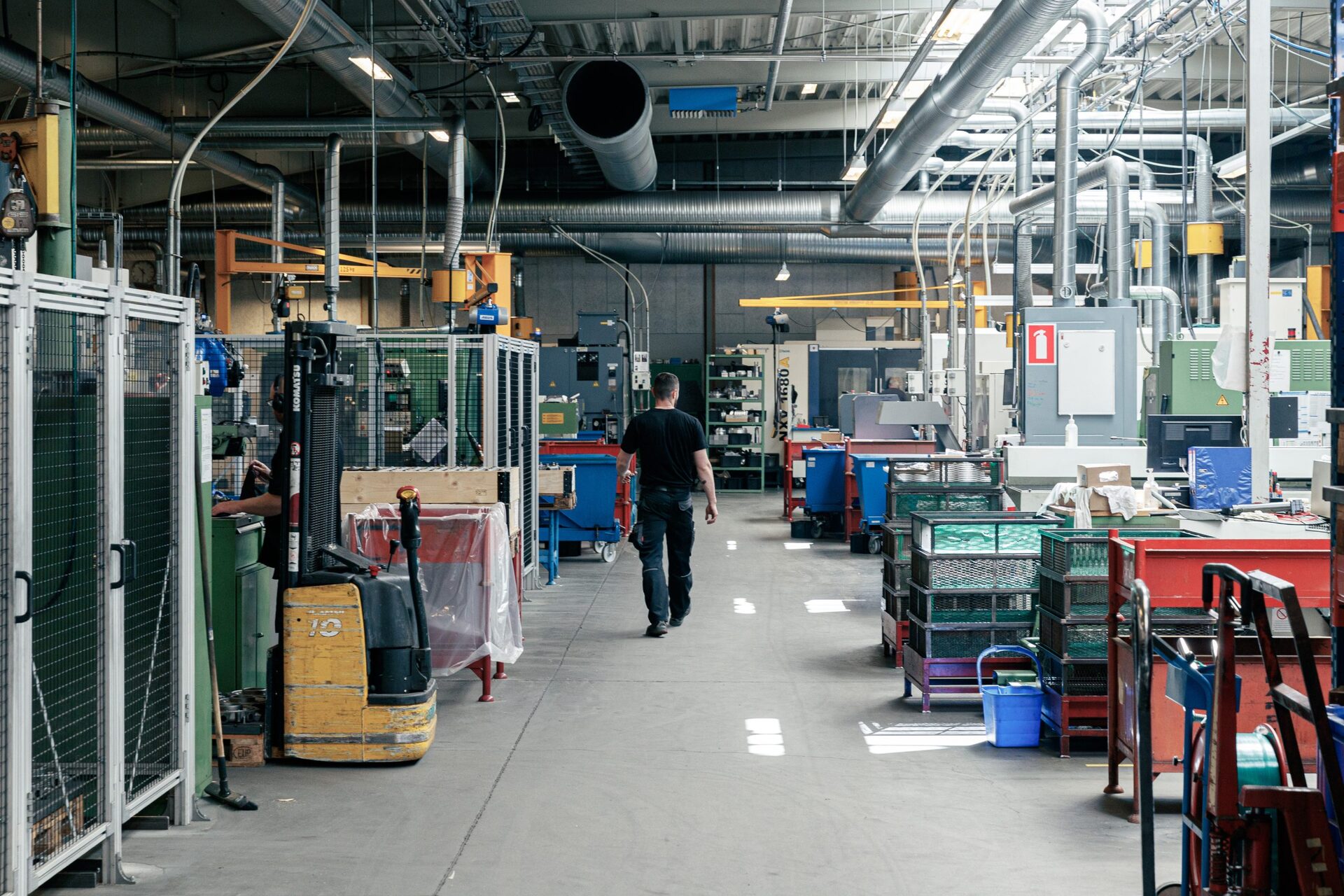
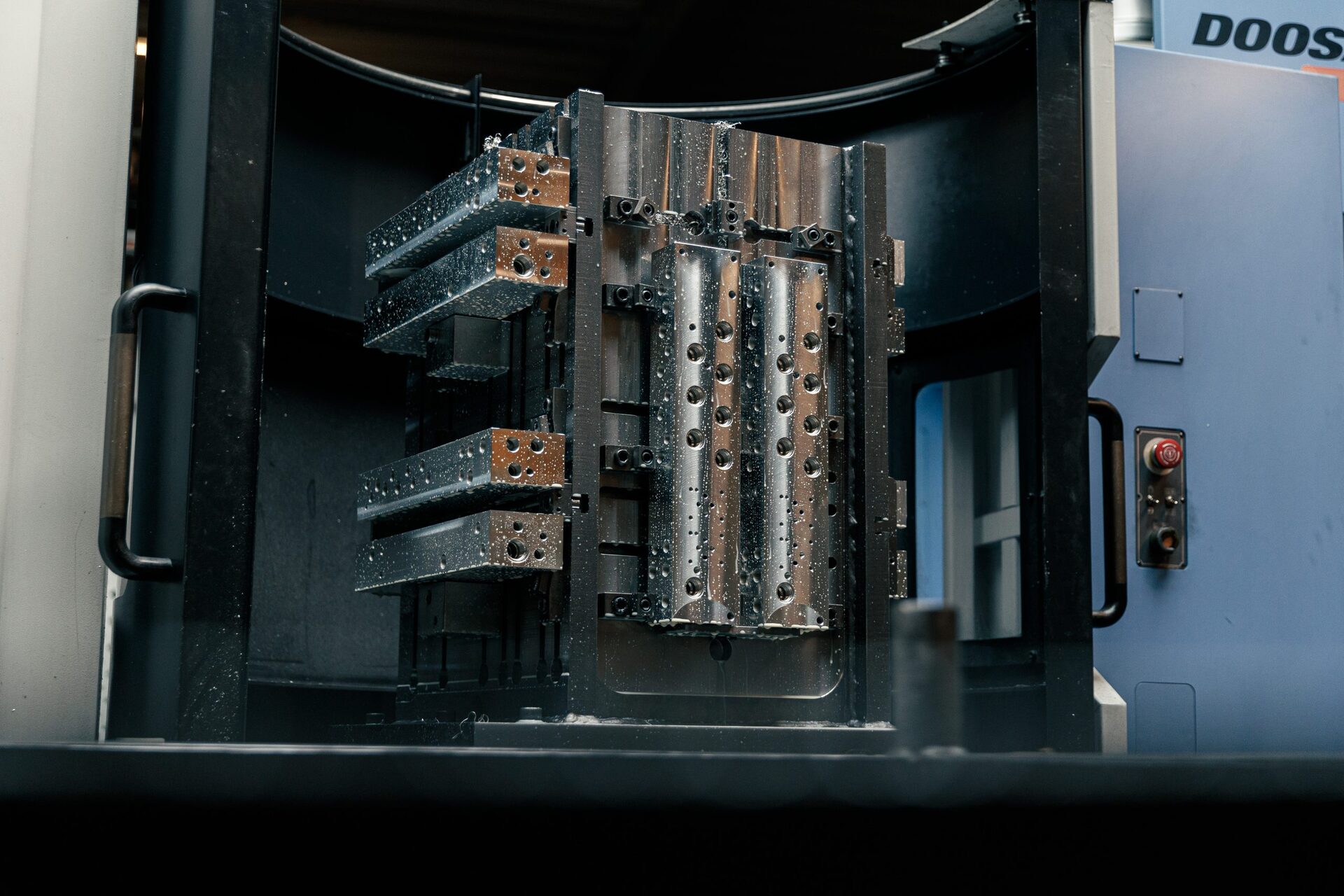
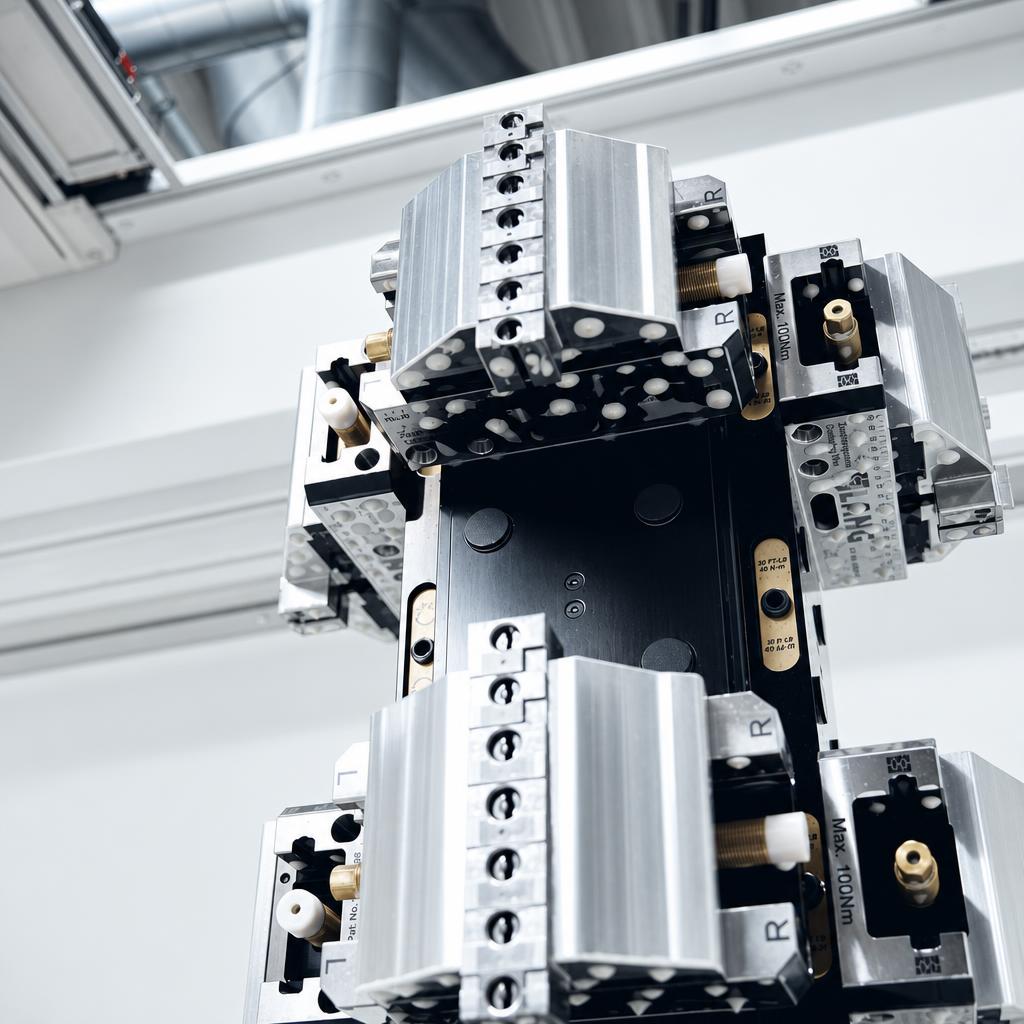
Automation is at the core of our business model. Robot handling, pallet systems and high-bay storage enable unmanned production around the clock.
- Unmanned operation outside normal working hours
- FMS with 48 pallets and integrated high-bay storage
- Robot and gantry handling of turning centres
- Competitive on both small and large series
Stable process = stable quality
Automated processes reduce variation. Combined with SPC and 3D measurement, this delivers predictable quality throughout the series.
- Stainless and acid-proof steel
- Structural steel
- Aluminium
- Brass
- Engineering plastics (POM)
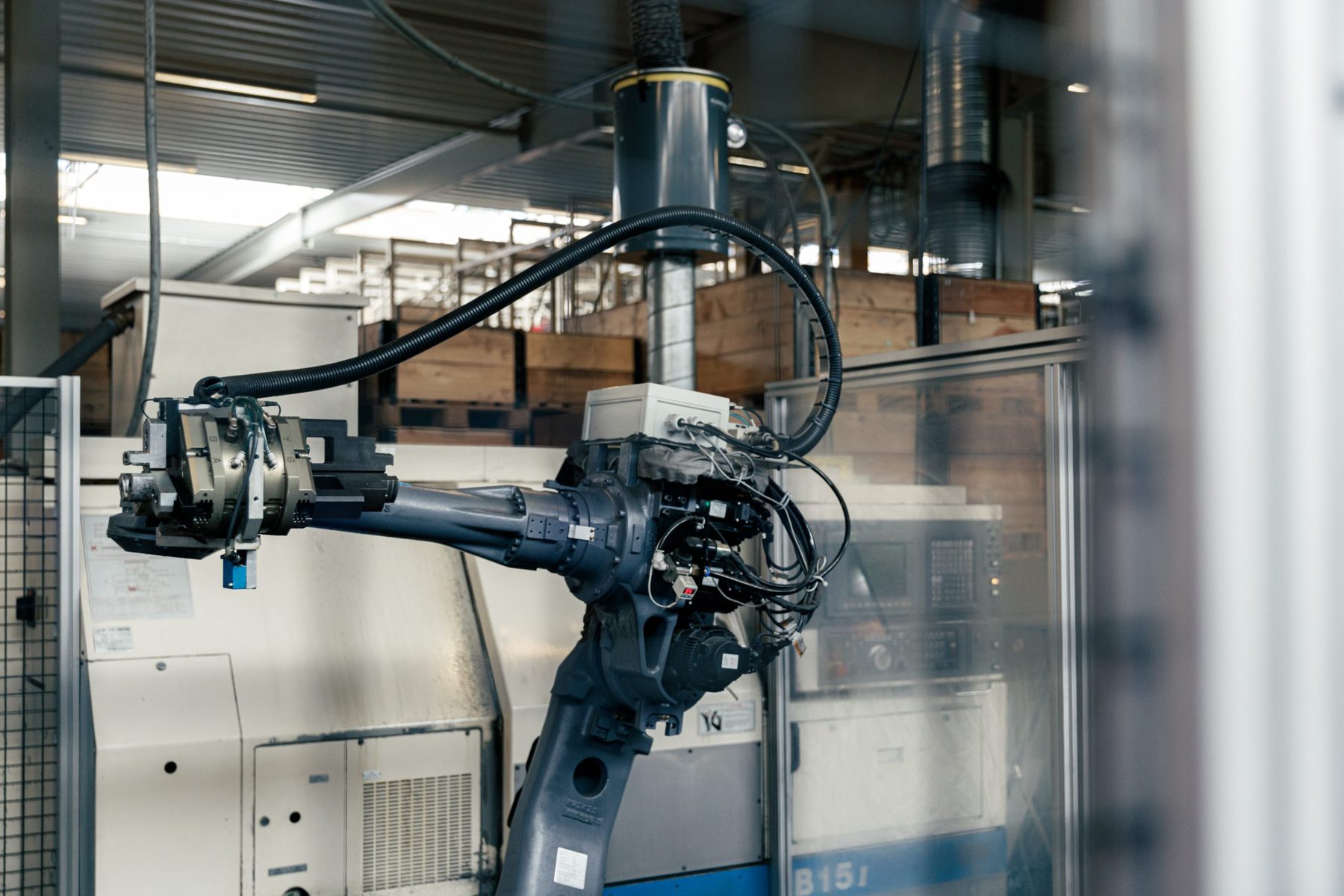
Robot cells as the link between machines
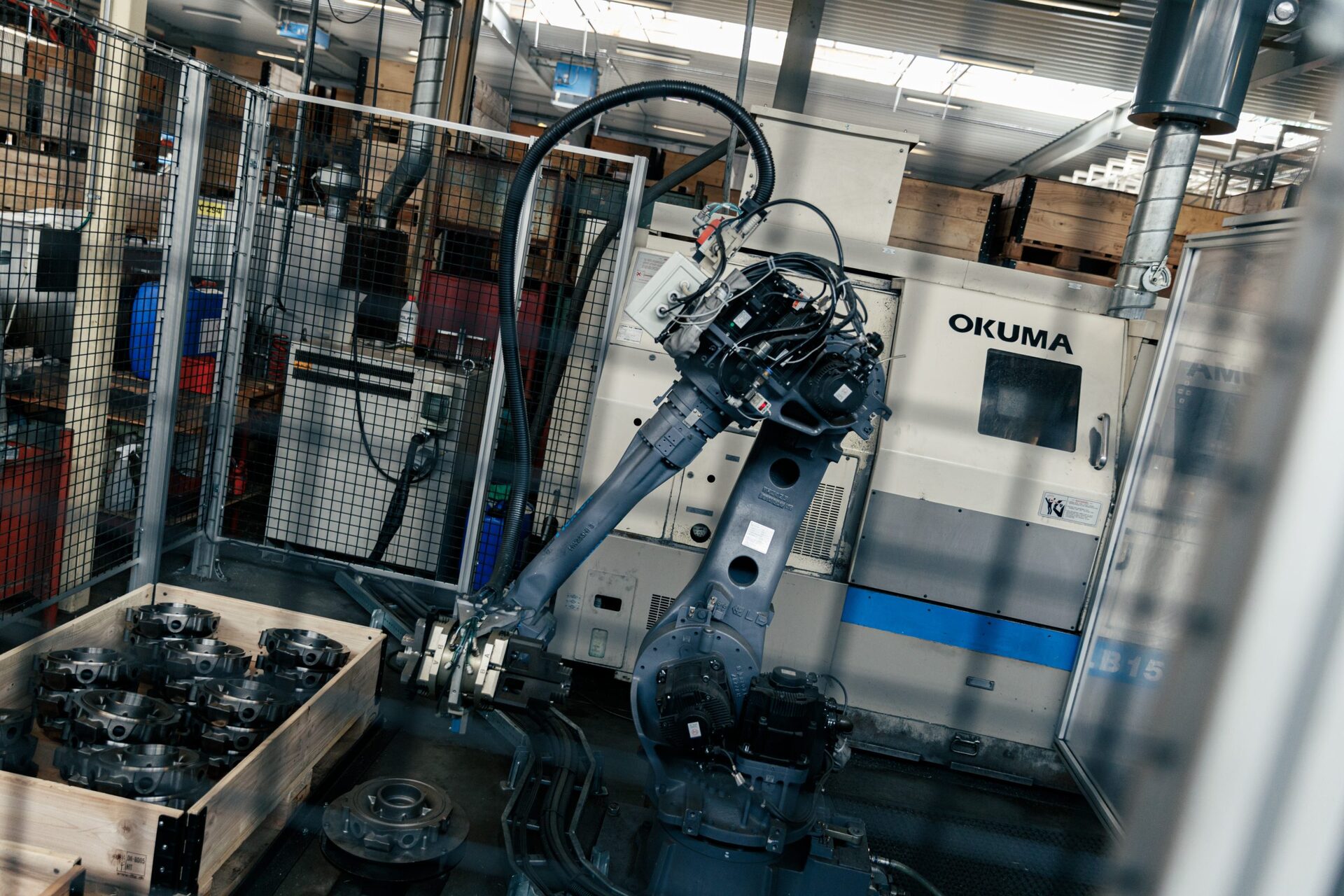
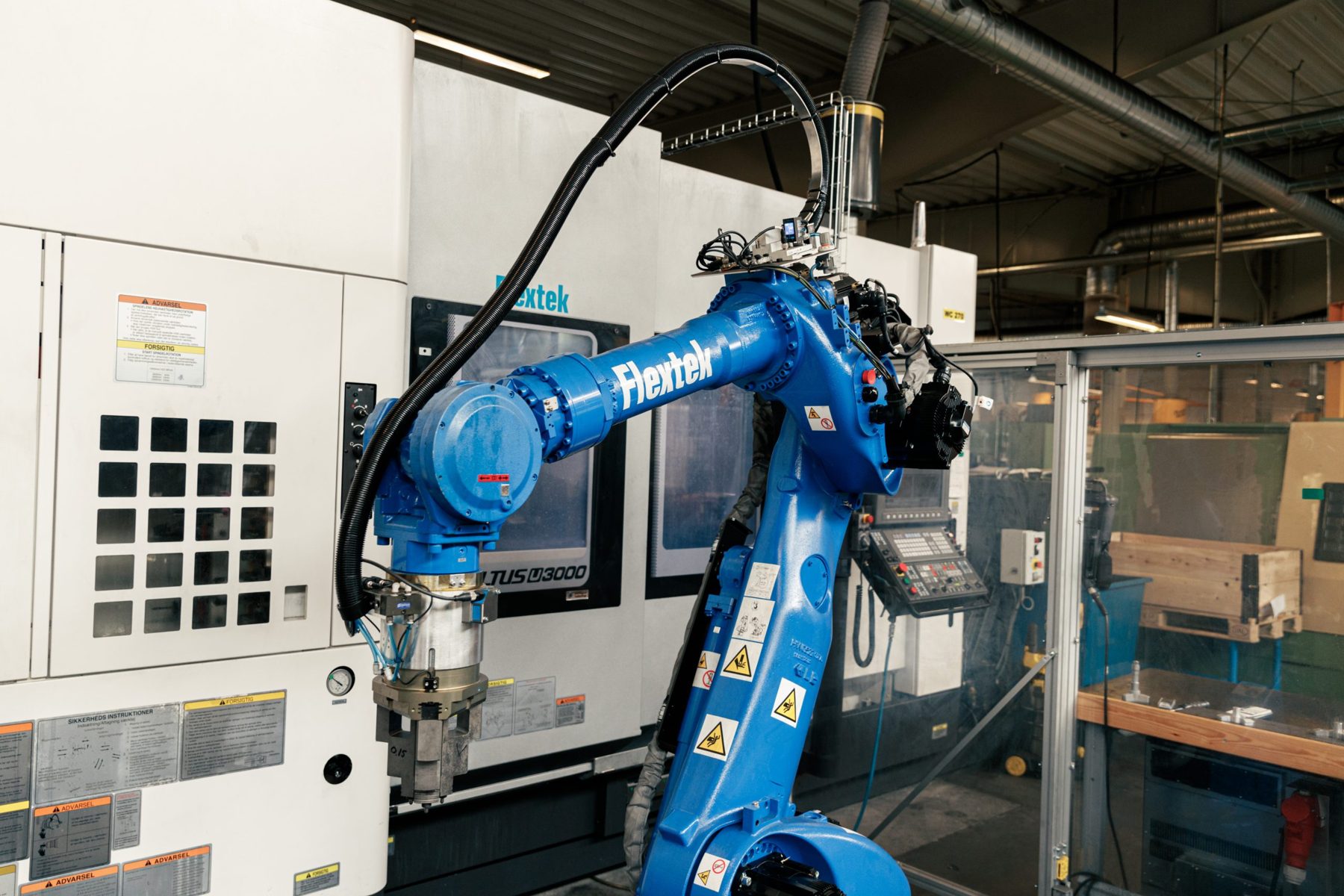
The robot cells in our production handle parts between machines, measurement equipment and storage, and are a central part of the automation that makes unmanned production possible. A robot can take a part from a machine, place it in another setup for a subsequent operation, and hand it over for measurement, without an operator needing to intervene manually between the individual steps.
The robot cells are programmed to handle several part types, which requires grippers and fixtures adapted to switch between different geometries without a long changeover time. We invest in flexible gripping solutions, so a robot cell can be redeployed for new part types instead of being locked to a single job throughout its life.
Beyond handling itself, the robot cells often monitor the process along the way, for instance by recording cycle times and reacting to deviations that may indicate a problem in the preceding operation. That kind of monitoring makes it possible to stop a process early if something is not working as expected, instead of an entire batch being machined incorrectly before the fault is discovered.
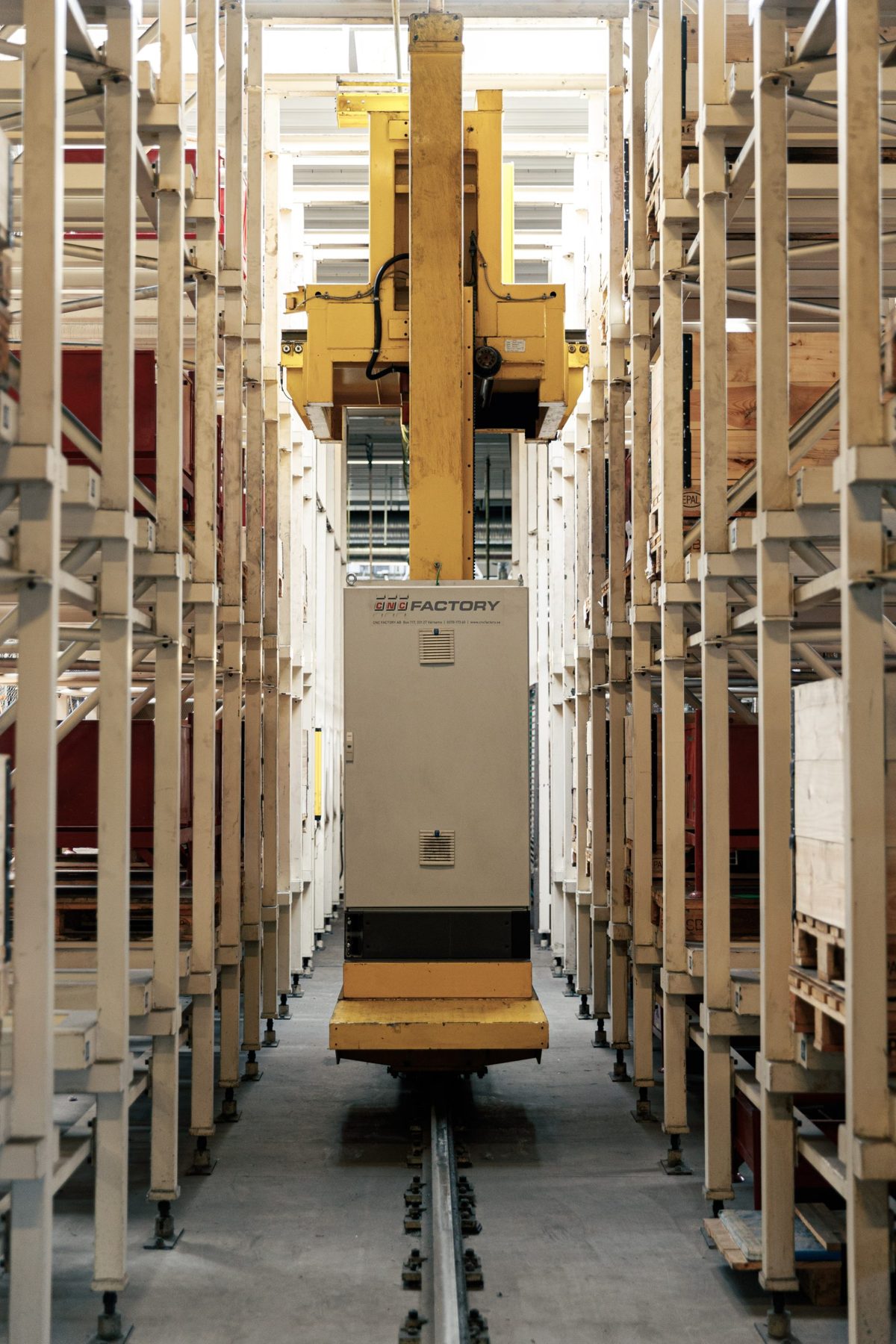
Gantry loaders and bar magazines as the basis for continuity
Gantry loaders are used to move parts in and out of machines where a robot cell is not the most appropriate solution, for example in simpler, linear handling tasks or on machines with a fixed, predictable movement pattern. Gantry loaders require less programming than a full robot cell, making them well suited to jobs where part type changes rarely.
The bar magazines in the turning department ensure the machines have enough material to run through an entire unmanned period without manual reloading. The capacity of each magazine is determined by part length and expected cycle time, so the magazine lasts exactly the desired running period without tying up unnecessary capital in excess raw material on the machine at any one time.
The combination of gantry loaders and bar magazines means large parts of production can be planned to run continuously across several shifts without manual handling of parts along the way. That gives a stable production rhythm and reduces the variation in cycle time that can otherwise arise when handling is performed manually by different operators.
Process monitoring as a precondition for release
Before a process is released for fully unmanned operation, it goes through a period of supervised running, during which we closely track cycle times, tool wear and measurement results. This phase makes it possible to catch unforeseen problems while an operator is still present to intervene, rather than discovering them only after the process has already run unmanned through an entire night.
Process monitoring continues, in a reduced form, even after a process is released for unmanned operation. Sensors and machine data record deviations in load, temperature or cycle time that may indicate emerging wear or an upcoming tool change, and this data is reviewed systematically so trends can be caught before they develop into production stops.
This systematic approach to monitoring means we can extend the unmanned running period gradually as a process proves stable, rather than fixing a limit from the outset. That gives continuous optimisation of how much capacity can actually be extracted from a given setup over time.
Tool management in an automated production
In a production with a high degree of automation, tool management is a critical discipline, because an unexpected tool break in the middle of an unmanned period can halt production until an operator returns. We record expected tool life for each tool and schedule changes so they happen within manned hours, rather than waiting for an actual breakage.
Tool data is linked to the specific machine and programme, making it possible to trace which tool was used for a given order and when it was last changed. That traceability is valuable if questions arise about surface quality or dimensions on an earlier delivery, since it allows us to investigate whether tool condition could explain the issue.
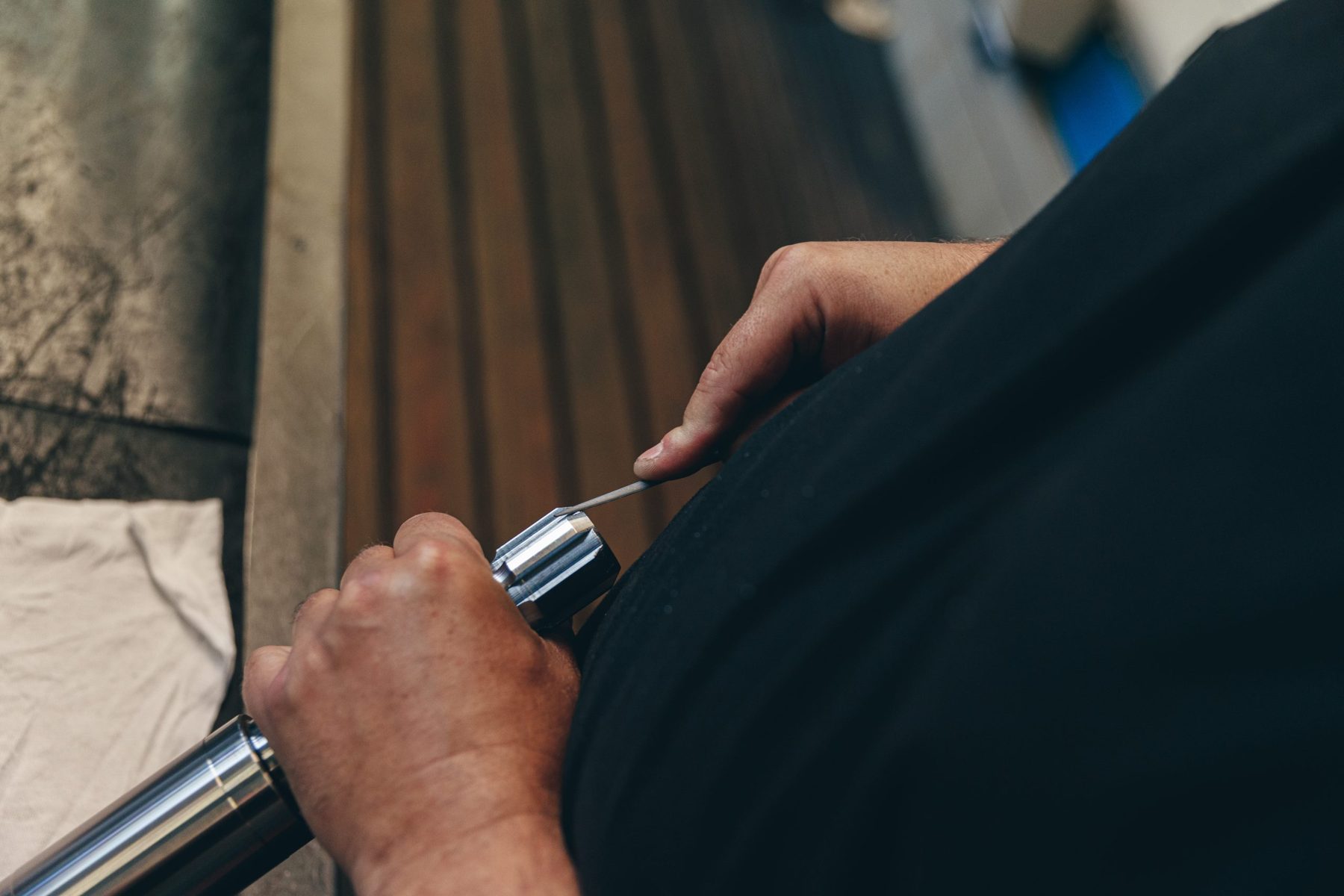
Automated tool monitoring is supplemented by periodic manual inspection, where operators visually assess tool condition and compare it with recorded data. That combination of automatic and manual checks gives a more robust basis for planning tool changes than either method would provide alone.
Automation tailored to both large and small series
The degree of automation in our production is not directed solely at large series. Even smaller orders can benefit from automated handling if a part is to be produced repeatedly over time, or if the process itself is time-consuming and therefore suited to unmanned operation, regardless of the total quantity in the order.
We assess order by order whether automation pays off, based on an overall evaluation of setup time, the expected lifetime of the job and the time savings from unmanned operation. An order that initially seems too small for automation may still be suitable if the customer expects repeat orders over a longer period.
This flexible approach means automation is not an either-or choice for a given customer, but an ongoing assessment that can change as an order develops from prototype to standing series. The customer is informed if a move to a more automated process changes price or lead time, so the decision is made jointly.
Investment in automation as a long-term strategy
Decisions on new automation solutions are made from a long-term perspective on how production is expected to develop, not only on the current order book. We assess whether a new robot cell or pallet system can be used broadly across several customer types and part geometries, so the investment delivers value even if a single customer's needs change over time.
This long-term approach also means we prioritise solutions that can integrate with existing automation rather than isolated single solutions. A new robot cell must work alongside the existing bar magazines, pallet systems and measurement equipment, so overall production remains coherent instead of consisting of several disconnected automated islands.
Investment in automation is seen as a direct investment in our ability to keep production in Denmark while remaining competitive on price against customers who are also considering suppliers outside the country's borders. It is a strategy that requires patience, because the benefits of automation are typically realised over several years, not within a single order.
Safety and operation around automated setups
Automated setups place demands on physical safety around the machines, both for employees working nearby during the day and to ensure operation can continue safely unsupervised at night. Robot cells and gantry loaders are enclosed and fitted with safety sensors that stop movement if someone enters the working area while a process is running.
Operational safety around unmanned setups also includes a plan for what happens if something goes wrong outside normal working hours, including alerts if a machine stops unexpectedly or a critical parameter deviates from expectation. That kind of readiness means a problem can be handled quickly even when no one is physically present in production.
We maintain automation equipment following the same systematic approach as the machining equipment itself, because a fault in a robot cell or pallet system can halt production just as effectively as a fault in the machine itself. Preventive maintenance of automation is therefore a fixed part of the overall maintenance plan.
Shall we produce something for your company?
Send us your drawing and we will come back with a technical assessment and a quotation. We accept electronic drawings in most formats and treat all material confidentially.