
Turning
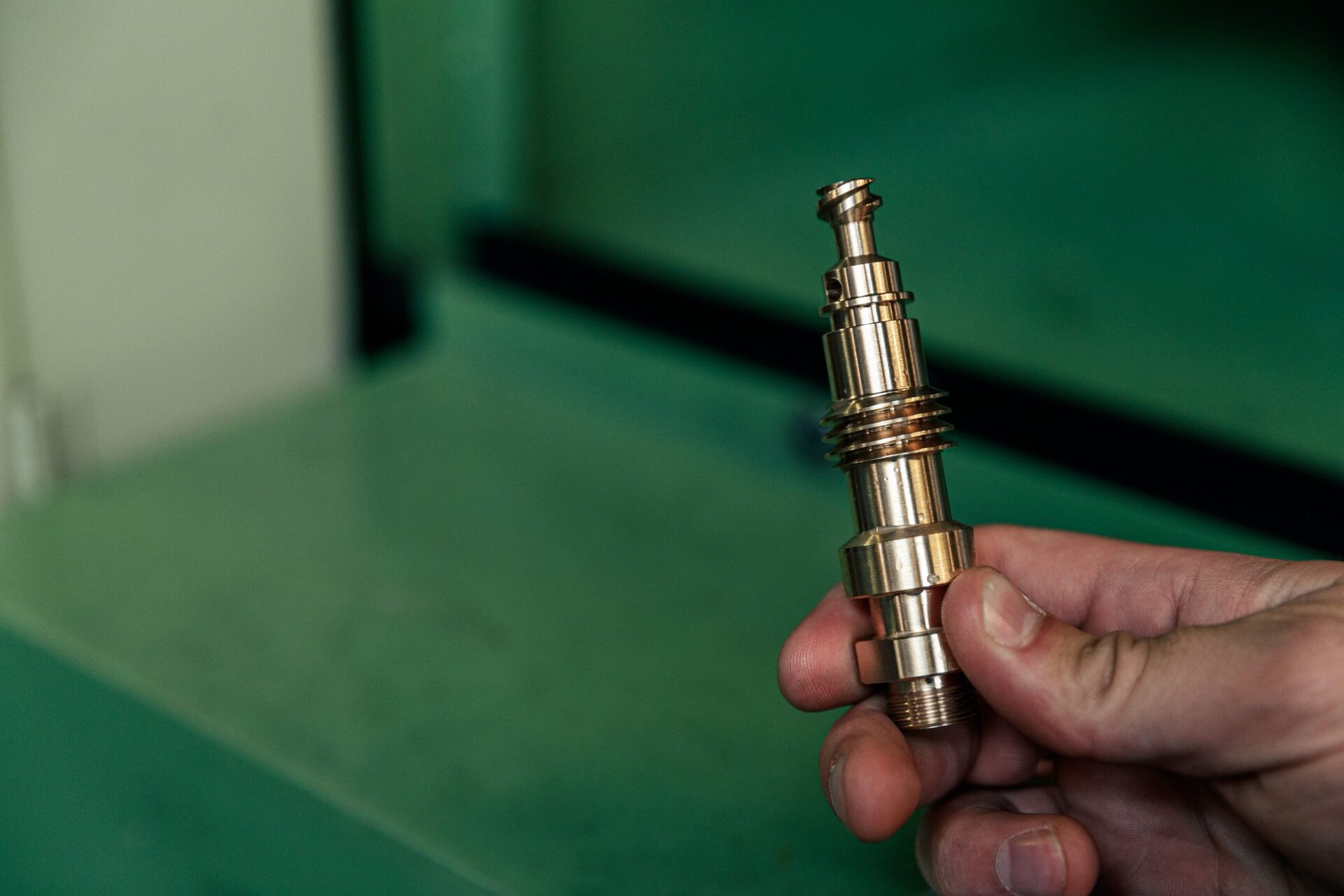
CNC turning of parts up to ø400 mm, with automatic turning up to ø65 mm. C and Y axes allow complex parts to be completed in a single setup.
- Automatic turning up to ø65 mm
- Turning up to ø400 mm
- C and Y axes for complete parts in one setup
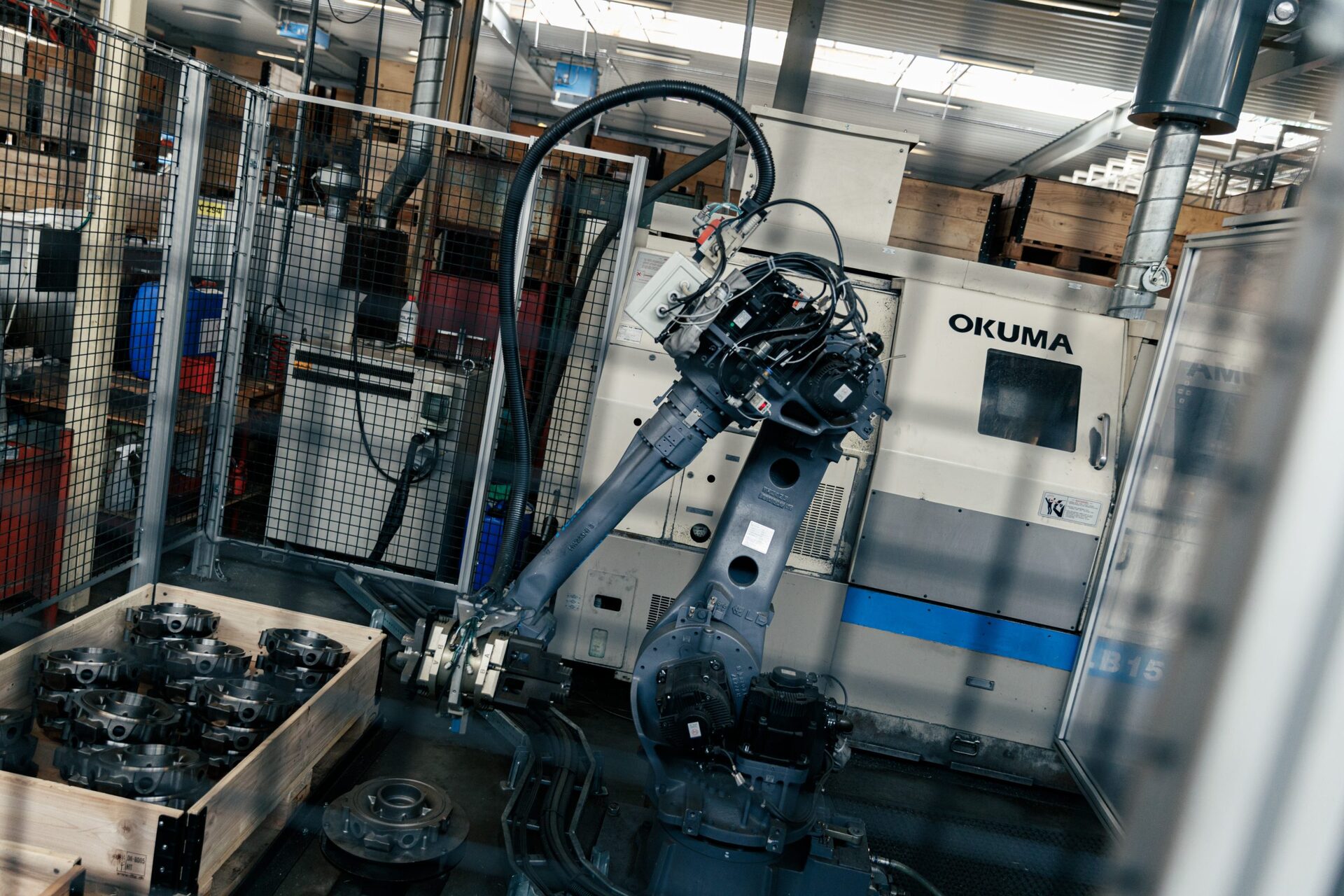
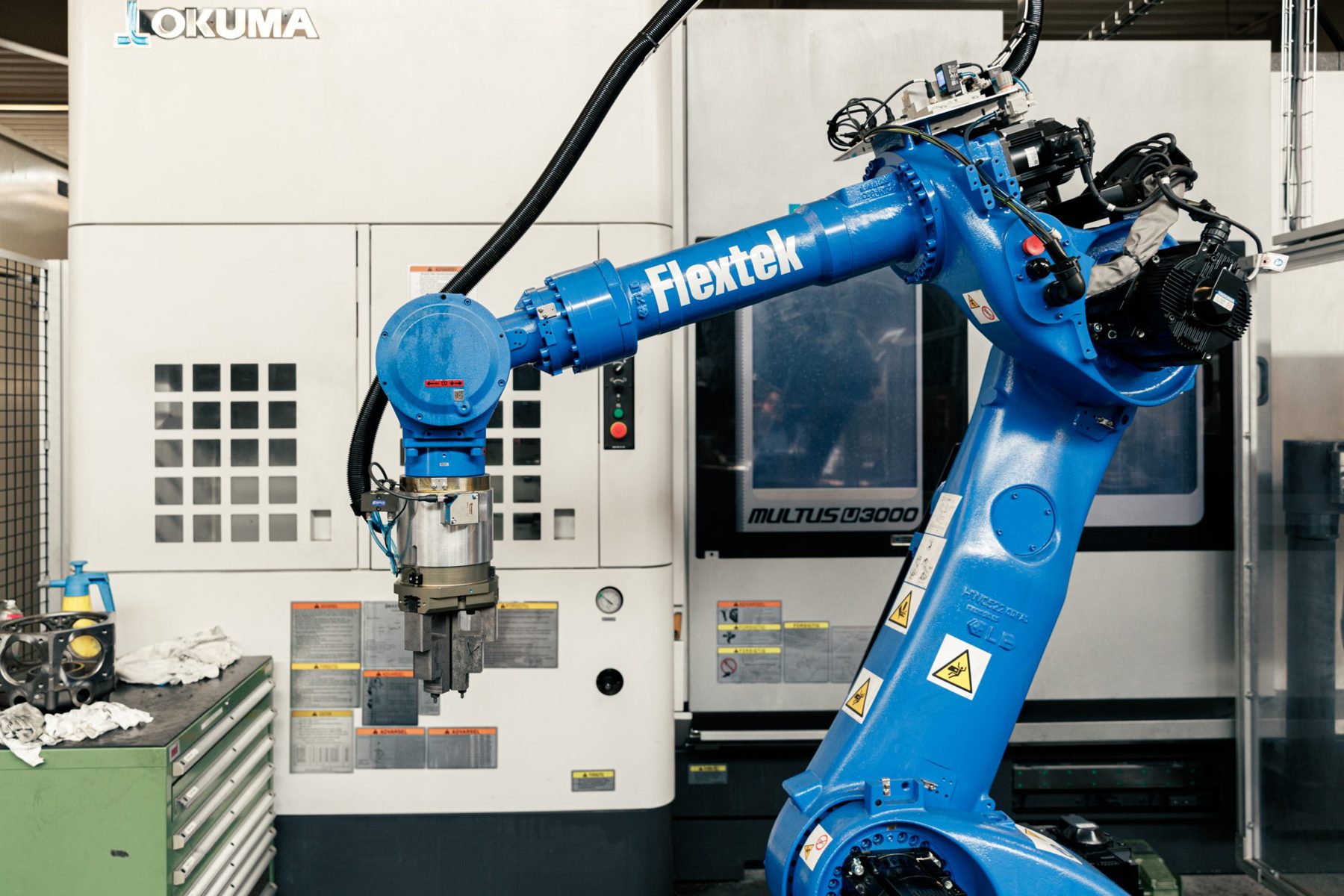
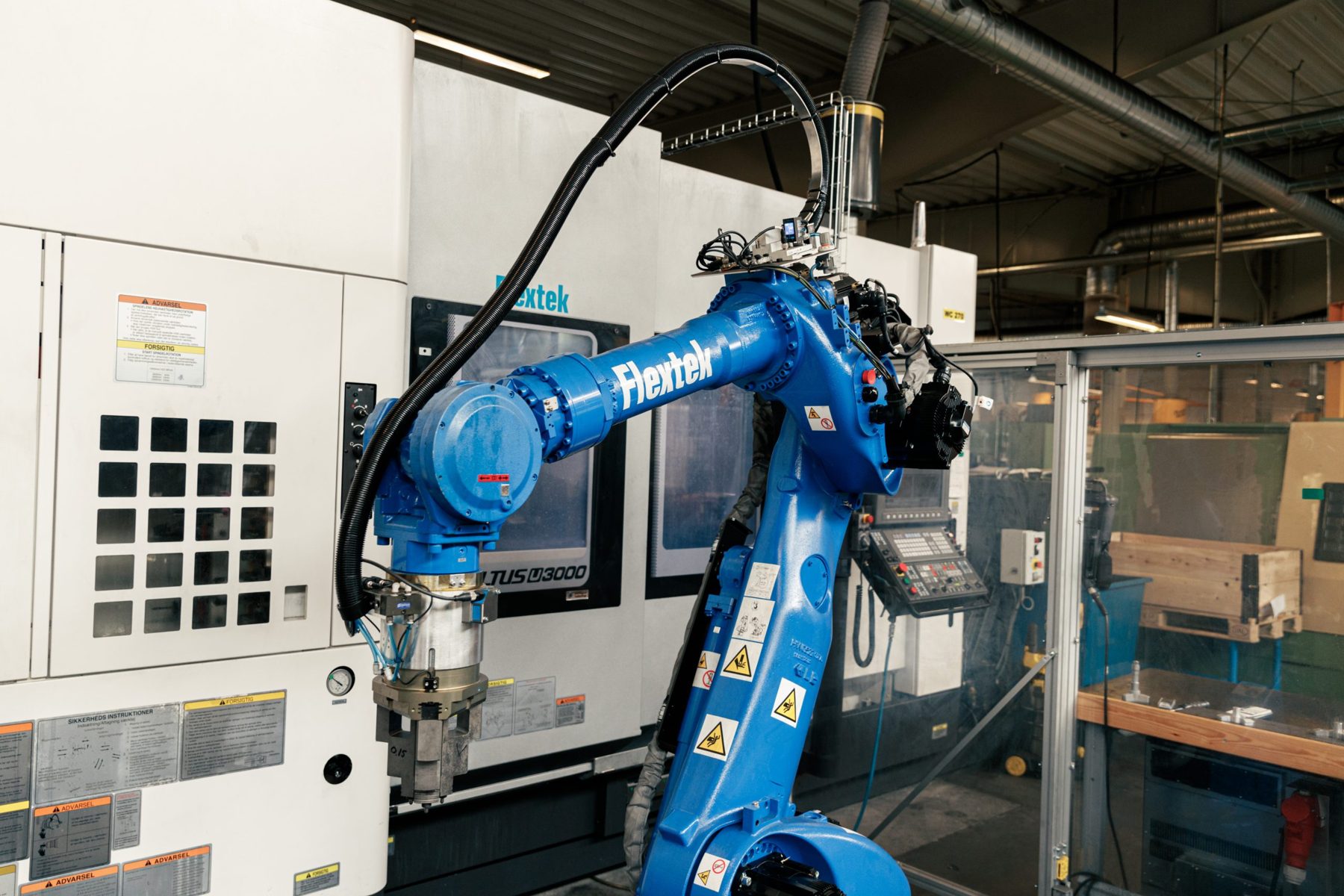
- Bar feeders and robot handling for unmanned operation
- More than 50,000 turned parts per month
From prototype to high volume
We program in Mastercam and run prototypes, pilot series and ongoing high-volume production. High automation keeps cost per part down without compromising tolerances.
Materials
Stainless and acid-resistant steel, structural steel, aluminium, brass, engineering plastics (POM), composites and polymers.
- Stainless and acid-proof steel
- Structural steel
- Aluminium
- Brass
- Engineering plastics (POM)
- Composites and polymers
Automatic turning tailored to high volumes
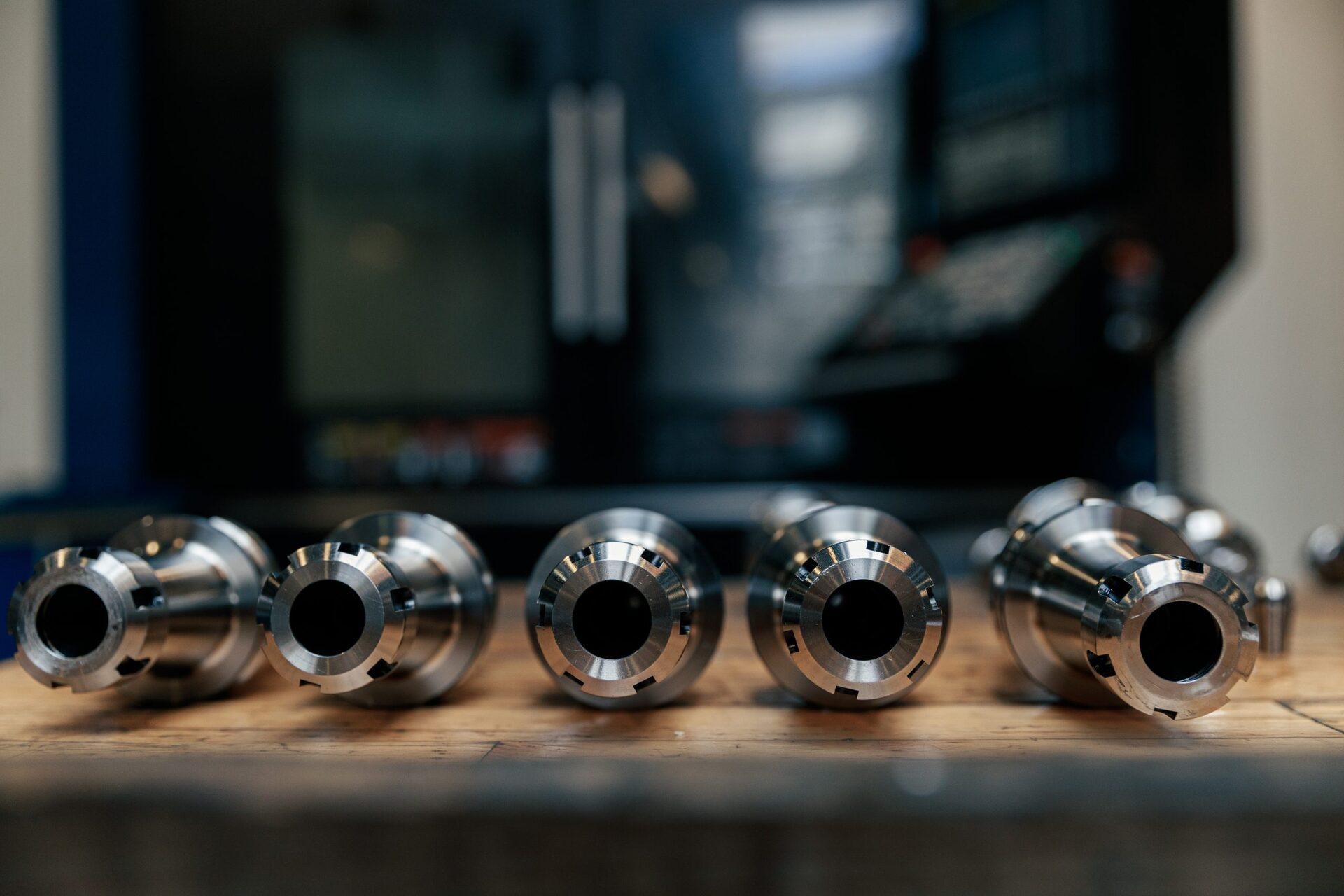
Our automatic turning machines up to ø65 mm are dimensioned to run high volumes with minimal manual intervention. The bar magazines are loaded with raw material in lengths that yield many parts per fill, so the machines can run through an entire night shift or a weekend without an operator present. That gives efficient use of machine hours and a stable, predictable cost per part, even in series of several thousand units.
Tool selection on the automatic turning machines is optimised for long life between changes, because a tool change in the middle of an unmanned night shift means a production stop until an operator returns. We therefore work systematically with tool monitoring and planned tool changes, so a change happens at a set time within normal working hours, rather than depending on when the tool actually fails.
Automatic turning is particularly suited to parts with repeated geometries in smaller dimensions, such as screws, bushings, shaft parts and fasteners. Here the high degree of automation keeps unit price low while holding tolerances stable throughout the series, because the process does not depend on manual handling from part to part.
Conventional CNC turning for larger and heavier parts
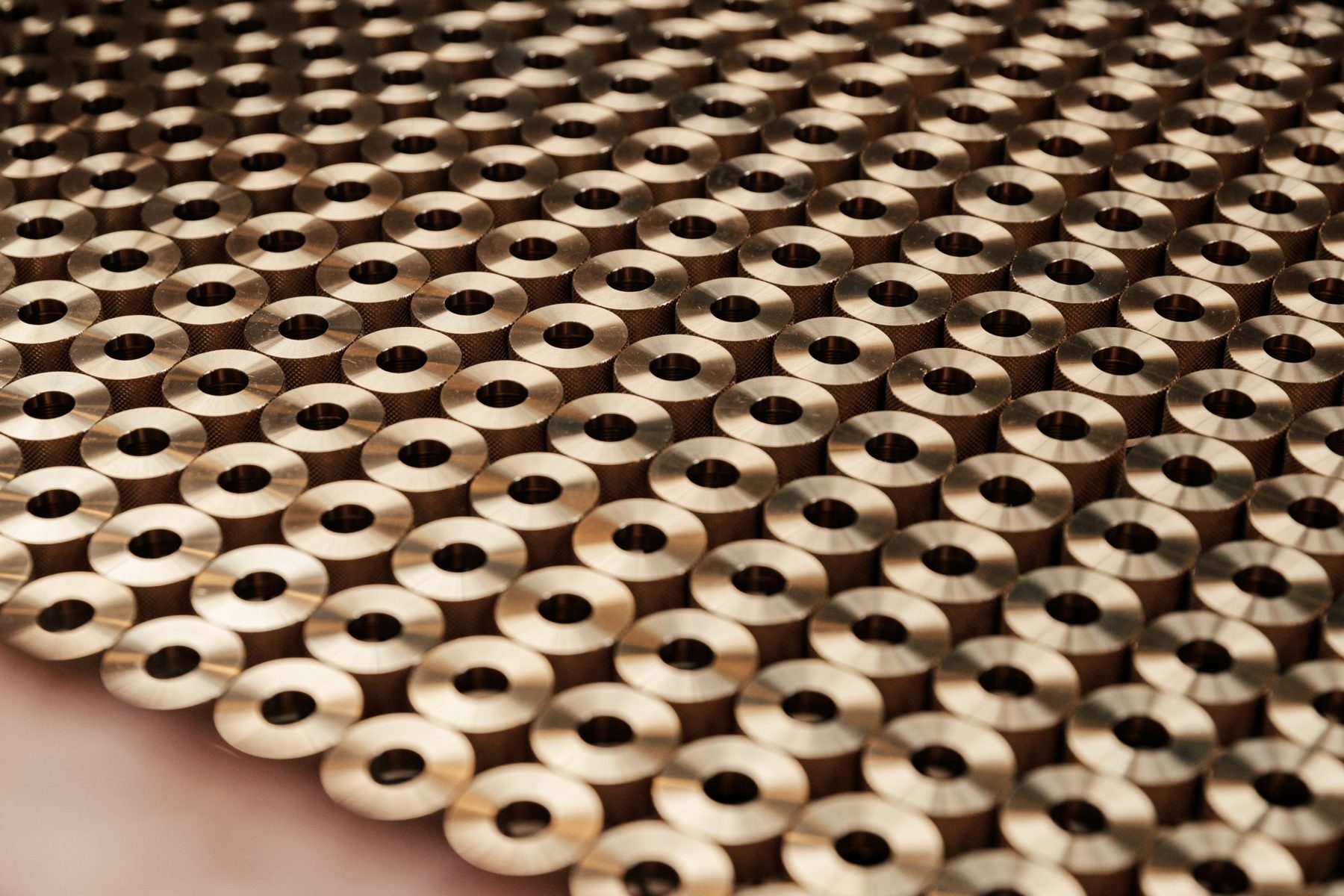
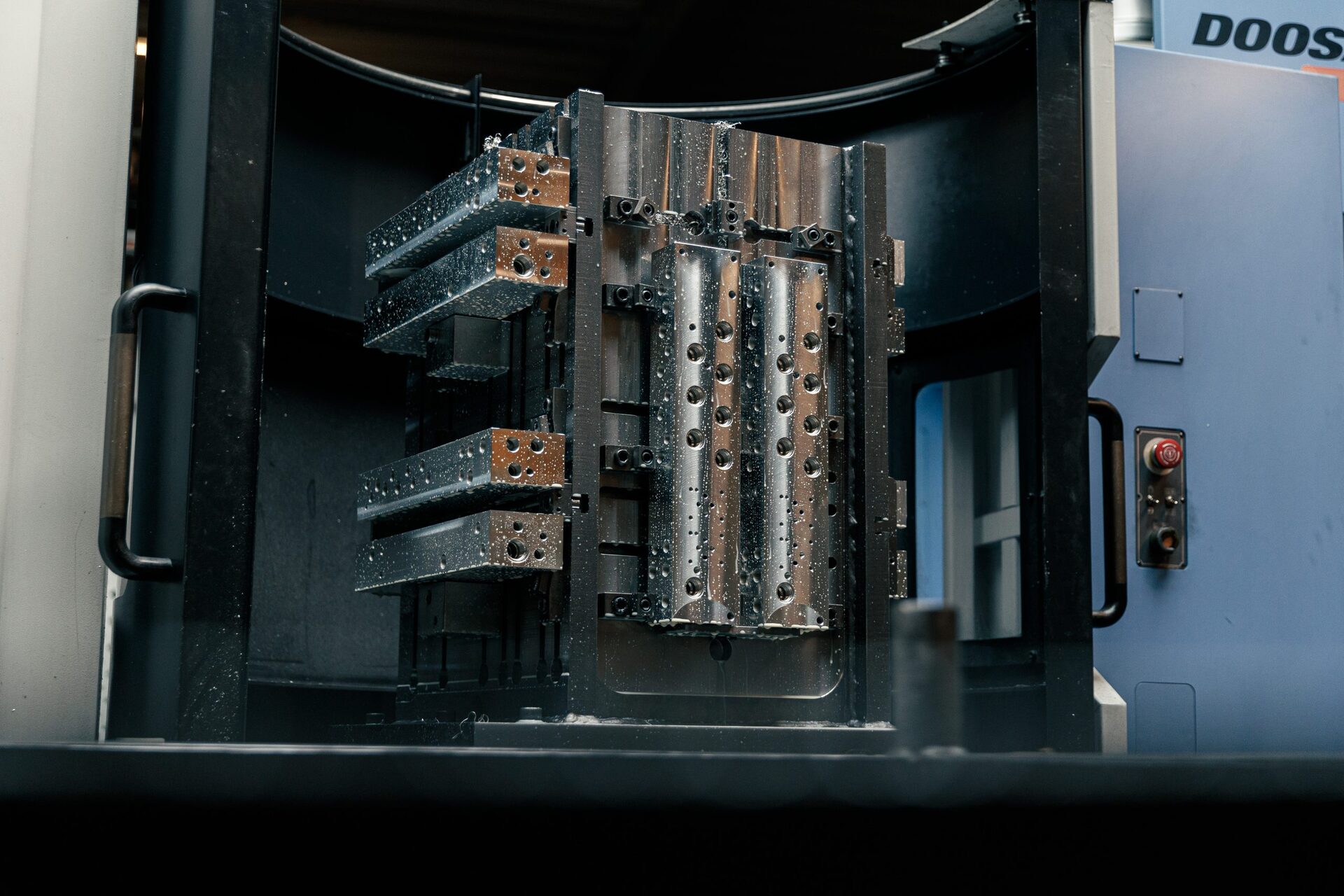
Our CNC turning machines up to ø400 mm cover the part of the workload where a part is too large or too heavy for automatic turning, and where volumes are typically lower. Here, the robustness of the setup and the rigidity of the machine matter more than in the small, fast series, because larger parts are more sensitive to vibration and require a more tailored cutting process to hold tolerance and surface quality.
For larger parts we place extra emphasis on fixture planning, because an incorrectly positioned fixture can cause dimensional deviations that only appear at final inspection. We use custom-adapted clamping tools where necessary, and document the fixture so it can be reproduced precisely if the part is produced again at a later date.
This part of the turning department often handles parts for hydraulics, heavier machine components and parts where material consumption itself is a significant part of the cost. Here we are happy to advise on how the raw material dimensions can be optimised to minimise waste, without compromising the part's final strength or function.
Combined turning and milling in a single setup
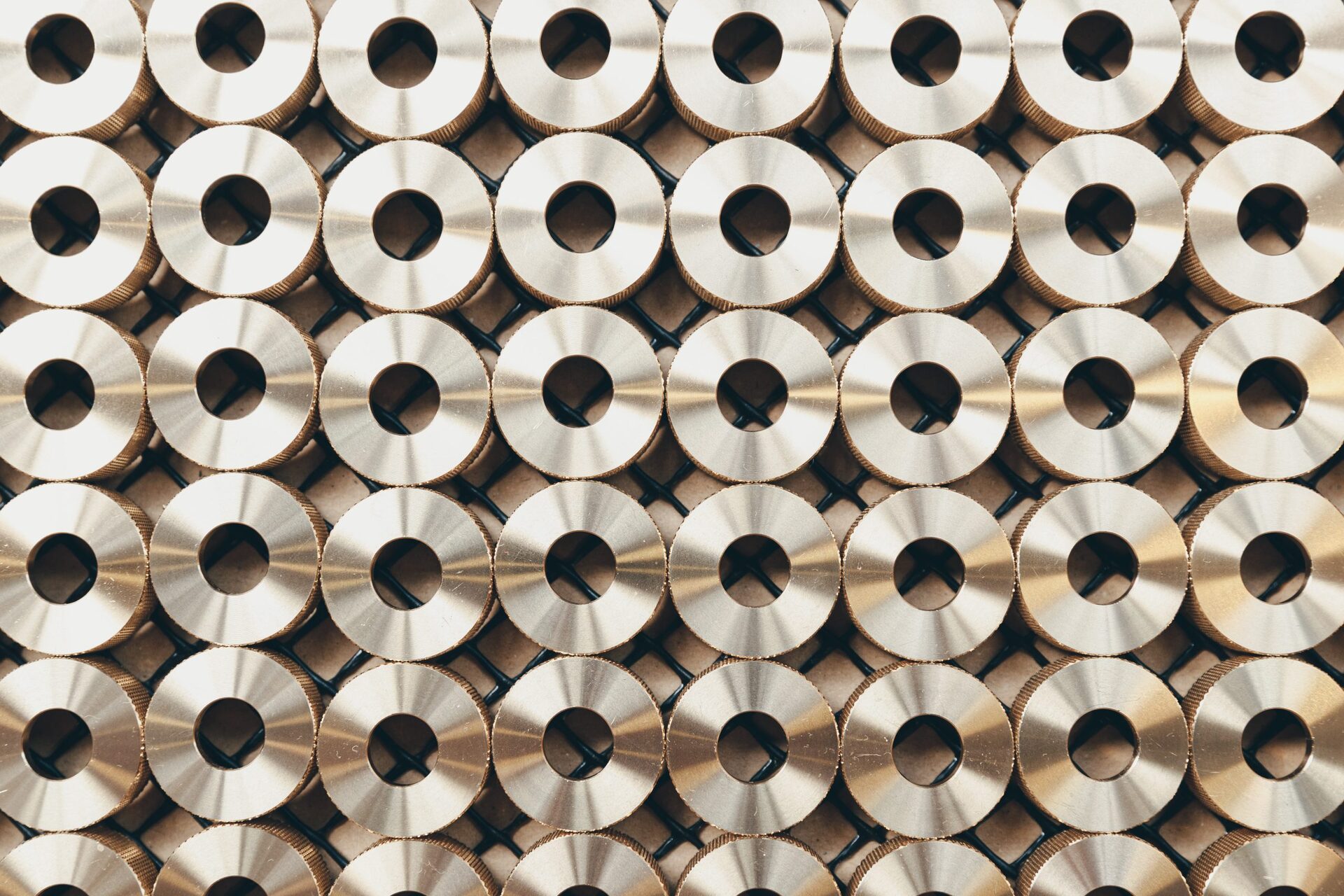
C and Y axes on many of our turning machines mean milling, drilling and threading can be carried out while the part remains in the same setup as for turning. That eliminates the inaccuracy that can otherwise arise when a part has to be moved to a separate milling machine and re-clamped, while also reducing the time the part spends being handled between operations.
For parts with faces, holes or threads that need a defined angle relative to the turning axis, combining turning and milling in the same setup is often the only way to guarantee that mutual tolerance. Without that option, such a tolerance would require a subsequent adjustable fixture and a more time-consuming inspection process.
The combined process places high demands on programming, because several machining steps must be coordinated within a single sequence without collisions between tool and part. We programme and simulate these sequences thoroughly in Mastercam before they run on the machine, significantly reducing the risk of errors when starting new part types.
High-pressure drilling for deep and demanding holes
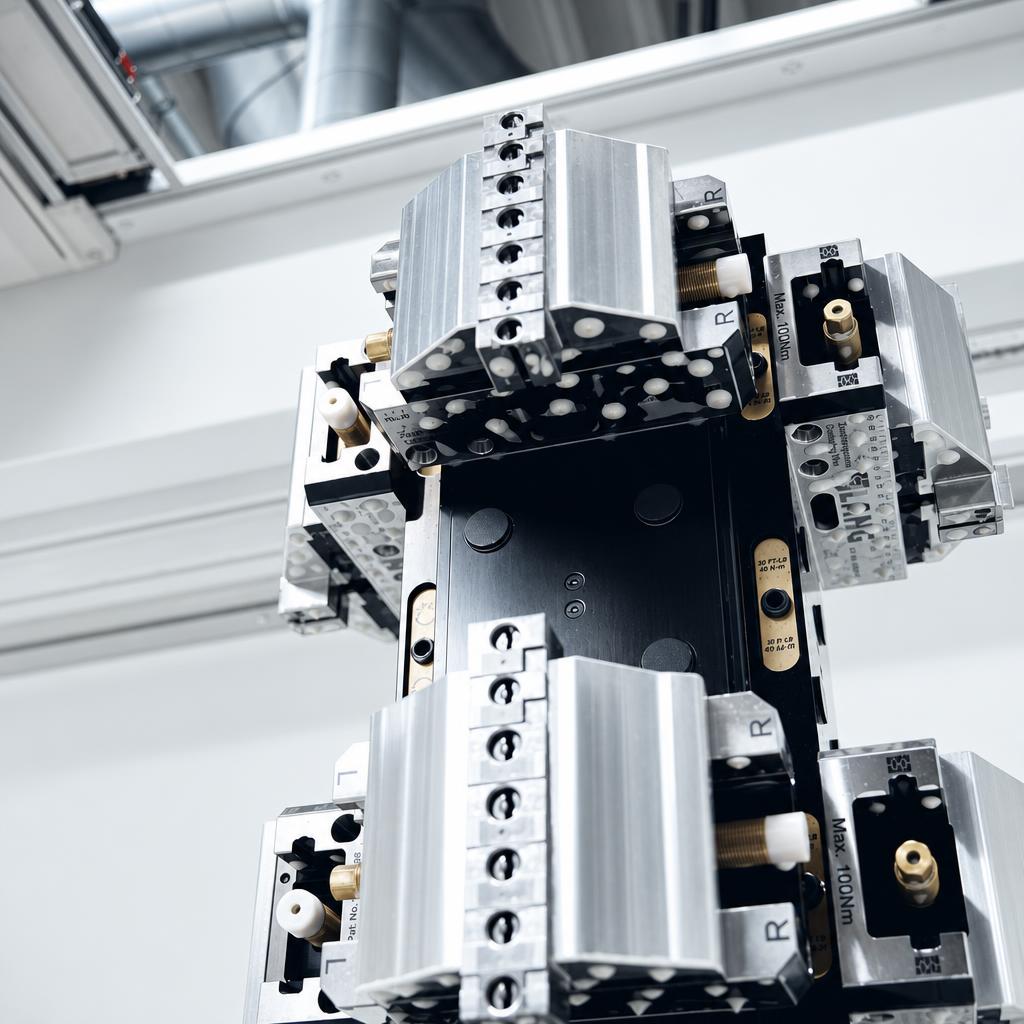
High-pressure drilling at up to 70 bar allows us to drill deep holes with good chip evacuation, even in tough materials such as acid-resistant steel, where ordinary drilling often causes chip build-up and overheating. The high pressure forces cutting oil right to the cutting edge and flushes the chips out through the drill, keeping the process stable even when hole depth is many times the diameter.
Deep holes are often used in hydraulic components, shaft parts with internal lubrication channels, and parts where a through-hole needs a uniform surface without grooves or directional changes. We choose drill diameter, feed rate and spindle speed based on material and hole length, tailoring the process to the specific job rather than applying a generic setting across all materials.
The quality of deep holes is checked with appropriate measurement equipment that can verify direction and cylindricity along the full length of the hole, not only at the entry point. For customers where the hole serves a pressure-bearing function, that kind of control is essential to document that the part meets requirements before it moves on to assembly or is shipped directly to the customer.
From drawing to approved process during start-up
When a new turning job is received, we start with a technical review of the drawing, assessing fixturing options, tool selection and expected cycle time. This stage often uncovers details that can be optimised before production starts, and it forms the basis of the quotation the customer receives, so the price reflects the real process rather than a preliminary estimate.
The first physical parts are typically produced as a small trial run, where both the process and the inspection plan are fine-tuned. This is where it is established whether the cycle time holds, whether surface quality is stable from part to part, and whether tool life matches the planned production rhythm. Any adjustments are made at this stage before the process is released for larger series.
Once the trial run is approved, the process is documented, including fixturing, tool list and inspection plan, so it can be reproduced precisely for future re-orders. That documentation means a customer returning with a repeat order years later can expect the same quality and the same price, without the process having to be reinvented from scratch.
Standing series with agreed call-offs and stock buffer
Once a part has matured through the prototype and trial-run phases, it is typically moved to a fixed, automated setup where production runs as a standing series. We agree a call-off structure with the customer that matches their own consumption pattern, and we can hold an agreed stock buffer of finished parts, so the customer can draw deliveries as needed without tying up capital in large one-off orders.
Call-off series require close dialogue about expected consumption, because our machine-capacity planning extends several weeks ahead. We encourage customers to give early notice if a consumption pattern changes significantly, so we can adjust the production plan well in advance rather than reacting urgently once the stock buffer is already running low.
For series running over several years, we continually reassess whether the process remains the most appropriate one as tooling technology and machine capacity evolve. If a new setup can reduce cycle time or improve stability, we discuss it with the customer before implementing a change, so any price adjustments and quality implications are known in advance.
Measurement and documentation throughout the turning process
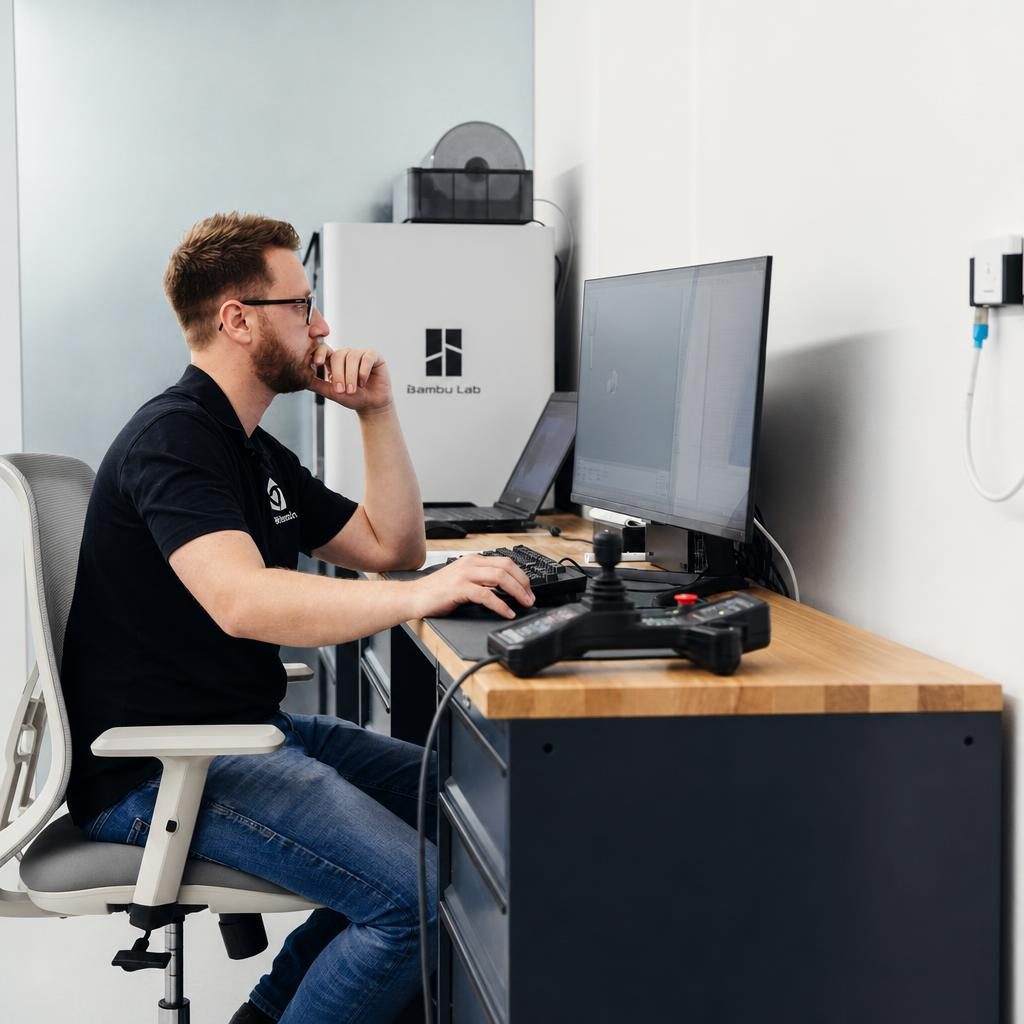
All turned parts are measured on 3D equipment as a fixed part of the process, not only as a spot check at the end of delivery. Measurements cover the dimensions defined as critical on the drawing, and results are recorded so they can be retrieved again if a customer later requests documentation for a specific delivery or production date.
In large series we apply statistical process control, tracking selected dimensions continuously over time. That makes it possible to detect a gradual drift in the process, for example from tool wear, long before it becomes an actual defect. This kind of monitoring is especially valuable in unmanned setups, where no operator is present to observe the process continuously.
Inspection reports accompany the delivery to the extent the customer wants, and the format is adapted to fit the customer's own incoming inspection. For customers requiring traceability, we can link measurement results to the specific material batch a part is made from, giving a coherent documentation trail from raw material to finished part.
Shall we produce something for your company?
Send us your drawing and we will come back with a technical assessment and a quotation. We accept electronic drawings in most formats and treat all material confidentially.