
Transport and rail
Machined parts for rolling stock, transport equipment and infrastructure, where service life, documentation and long supplier agreements are part of the job.
- Long service life under constant vibration and load
- Full traceability on material and process
- Documentation that follows the component through its life
- Stable supply across multi-year agreements
- Spare parts many years into the future
Documentation that follows the component
In transport and infrastructure it must be possible, many years later, to document what a component is made of and how it was inspected. Our quality system links material certificate, process and measurement result at batch and part level, so the documentation can be retrieved when it is asked for.
Built for vibration
Vibration is the most common reason joints loosen and wear appears earlier than calculated. We machine mating faces, threads and locking geometries to tolerances that keep the preload in place, and coordinate heat and surface treatment where function requires it.
Multi-year agreements and stable capacity
Framework agreements over several years require a supplier with stable capacity and economy. A high degree of automation, Danish production and a broad machine park mean we can hold an agreed rate throughout the agreement and scale up as the programme grows.
Operating environment: speed, weather and vibration
Rolling stock and trackside infrastructure are exposed to a combination of high speed, heavy loads and weather effects that is often more demanding than in stationary machinery. A component in a bogie or a coupling system must function correctly from minus twenty to plus forty degrees, through rain, snow, salt spray from road de-icing salt in winter, and the constant vibration from the track.
Components mounted close to wheelsets and braking systems are also exposed to heat from braking and to the mechanical loads that arise when a train accelerates and brakes repeatedly during the day. We take this into account in the choice of material and surface treatment, so that a component does not fail under the heat cycle that is a regular part of the train's daily operation.
Infrastructure components along the track network, fittings, fastenings and signalling equipment, stand outdoors for years without the possibility of ongoing inspection. We select materials and finishes that withstand corrosion and weathering over the long period the component is expected to remain in place, rather than optimising solely for the price applicable at delivery.
Materials with fire safety in mind
We machine structural steel, stainless steel and aluminium alloys for transport equipment, chosen according to the component's function: load-bearing parts in steel for strength, while parts where weight affects energy consumption and acceleration are often made in aluminium. Material choice is discussed with the customer's designer where there is a genuine choice between several solutions.
Fire safety is a central part of material selection in rolling stock, where requirements on smoke and flame spread can rule out certain surface treatment methods or auxiliary materials that would otherwise be the natural choice. We coordinate with the customer on which requirements apply to the specific component, before selecting the process and any surface treatment through our partners.
Wear shoes, contact surfaces and other parts in direct mechanical or electrical contact with the rail or the current collector require materials with specific conductivity or wear properties. We work with this type of specialist material when the task requires it, and we adapt cutting data so that the material's particular properties are not lost during machining.
Tolerances that hold at high speed
In a coupling system or a bogie, the relative precision between several components determines whether the train's motion is stable at high speed. We machine critical surfaces in as few setups as possible to maintain the relative tolerance between mating surfaces, holes and threads, because it is the sum of small deviations that ultimately shows up as vibration or abnormal wear in service.
Fastenings for rails and overhead lines must be manufactured with tolerances that ensure correct preload throughout their service life, even when the component is exposed to temperature fluctuations and repeated loading from passing trains. We select thread geometry and fit that resist self-loosening, and we document the critical dimensions that are decisive for this function.
Signalling equipment and sensor mounts can have tight tolerance requirements to ensure correct positioning relative to the track, and an error here can affect safety-critical functions. We adapt measurement scope and documentation to how safety-critical the individual component is, in dialogue with the customer and the standards applicable to the task.
Tightness and wear in brakes, door systems and HVAC
Rolling stock contains pneumatic and hydraulic systems for brakes, door mechanisms and suspension, where tightness is just as important as in other industrial systems, but with the added factor that a failure here directly affects passenger safety and operational stability. We machine sealing surfaces and threads with the finish and fit that ensure tightness throughout the component's service life, not only at the first functional test.
Wear surfaces in couplings, door mechanisms and braking systems are subjected to a large number of cycles every day in service, and even a small degree of wear per cycle accumulates quickly over a train's annual mileage. We select hardening and surface treatment matched to the accumulated load, through established Danish partners, and we plan the machining so that dimensions are maintained after treatment.
HVAC and ventilation components in rolling stock must remain sealed against dust and moisture, while also being able to be dismantled for service without damaging the sealing surface at each disassembly. We adapt surface finish and material choice so that the sealing surface withstands repeated dismantling throughout the component's expected number of service intervals.
- ISO 9001 certified quality management since 2015
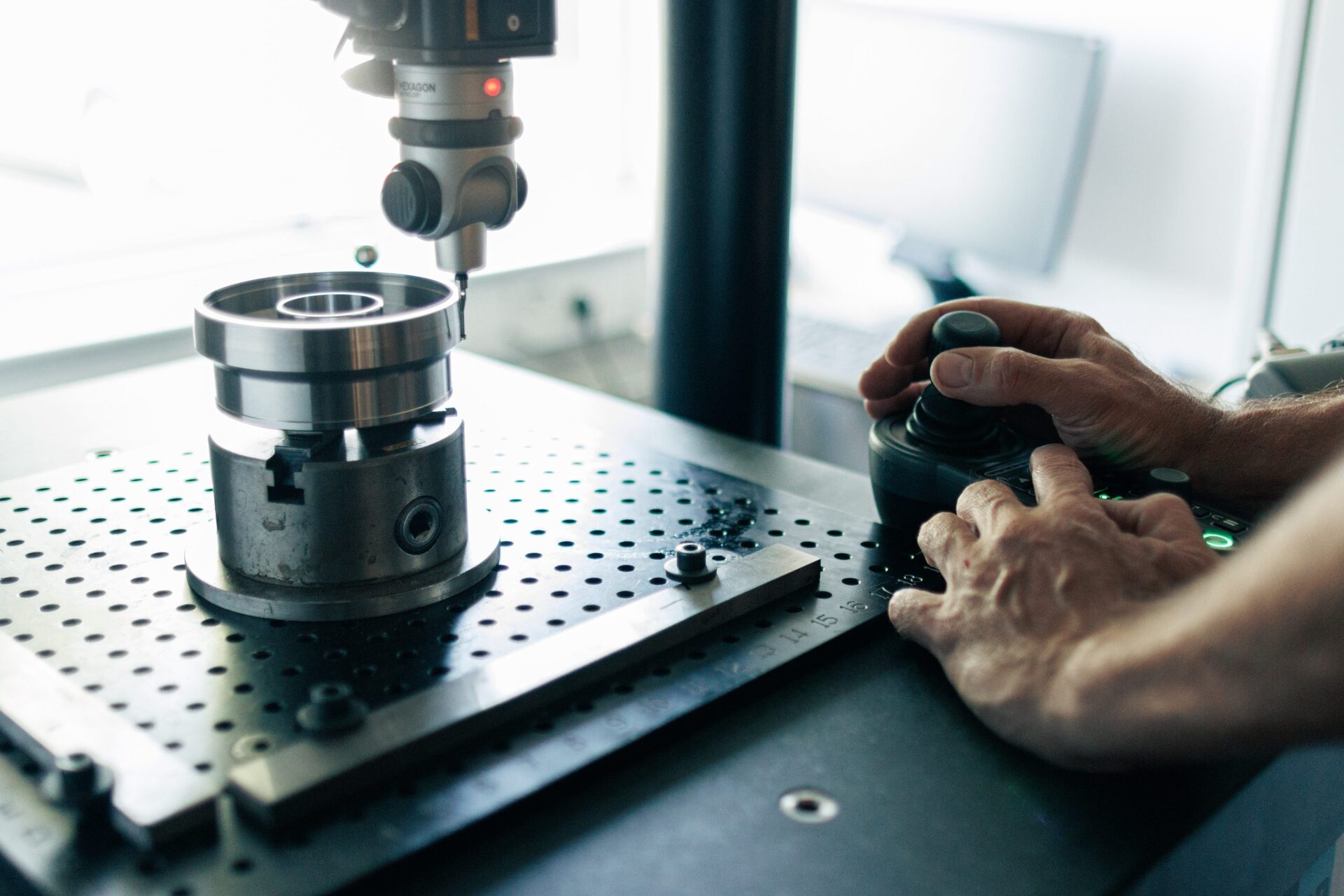
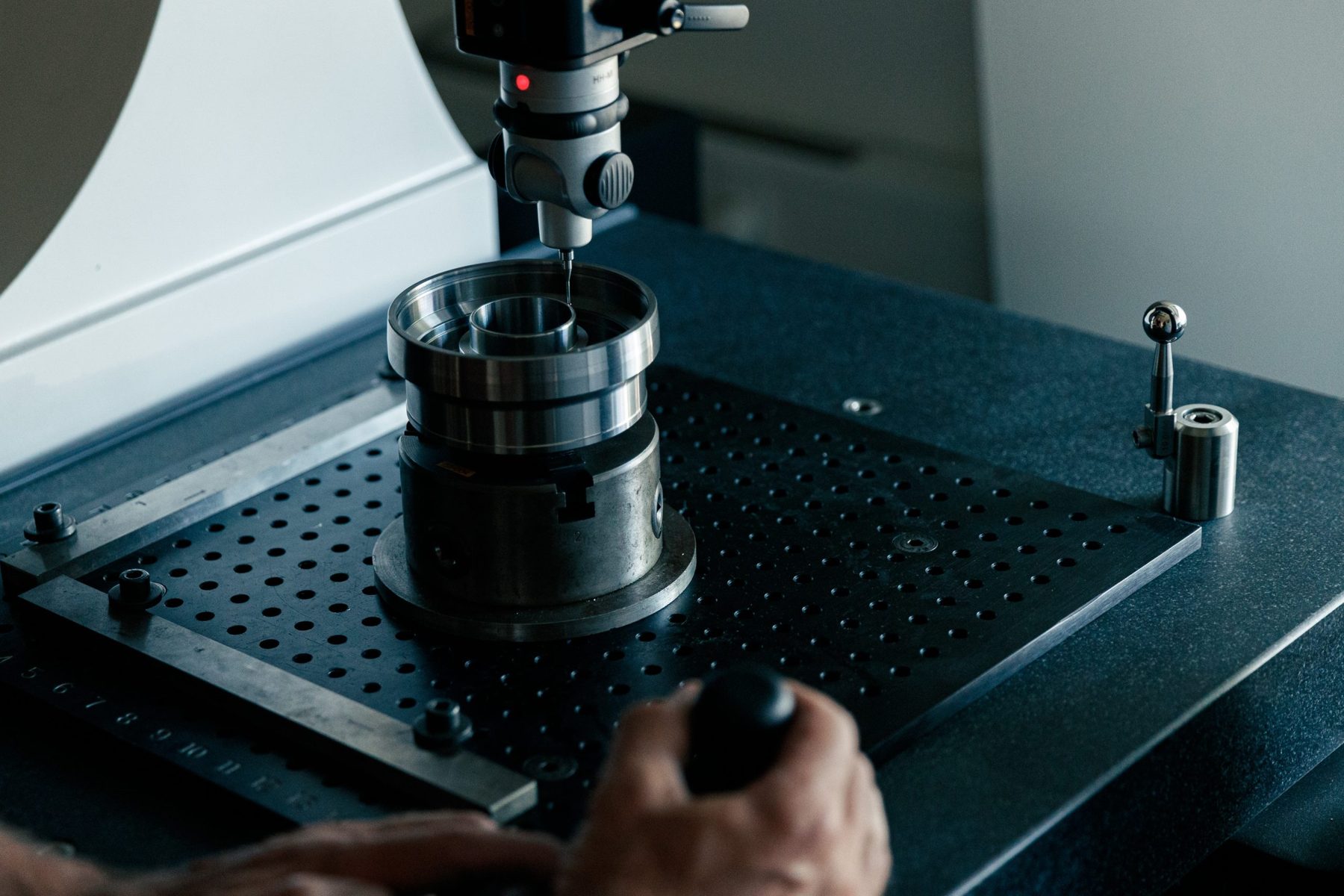
- 3D measurement of parts and measurement reports as documentation
- Traceability at batch and part level
- Industry-specific approvals and documentation requirements agreed per project
If you have questions about this content, please contact us at salg@rmfintech.dk.
Documentation through the entire approval process
In addition to the ongoing documentation that follows each delivery, we work to support the component's entire lifecycle in the transport sector, from the first prototype through the approval process to the last spare part ordered when the rolling stock is decades old. We adapt the level of documentation to the phase the component is in, without compromising on traceability.
Certain components in rolling stock must go through a formal approval process, where documentation from production forms part of the customer's overall application to an authority or a certification body. We supply that documentation in the format and scope the customer needs for the process, and we readily adjust reporting if requirements change during a project.
We store documentation electronically, linked to order and batch number, so that a customer enquiry about a delivery several years old can be answered quickly without having to dig through physical archives. This is a practical advantage when a component needs to be traced back as part of a technical investigation or a warranty case.
Series production and the aftermarket over decades
Transport equipment typically remains in service for thirty to forty years, which means the need for spare parts often extends far beyond the period during which the original series was produced. We archive programs, fixtures and measurement plans throughout this entire period, so that a spare part ordered in twenty years' time can be produced identically to the original, without the customer having to keep the technical basis themselves.
Framework agreements in this industry typically run over several years with agreed call-offs rather than individual orders, which requires us to be able to plan capacity far into the future. Our combination of automated setups and a broad machine fleet allows us to maintain a stable rate throughout the agreement period and adjust up or down as the customer's programme changes.
Some components for older rolling stock no longer have an available original drawing. We can reverse-engineer a worn or worn-out part by measuring it on 3D equipment and discussing the likely original tolerances with the customer's engineer, so that we can produce a replacement that fits and functions correctly in the existing design.
Collaboration and confidentiality in long supply chains
Deliveries for transport and infrastructure projects are often part of large, publicly tendered contracts, where confidentiality regarding technical specifications and prices is a condition of the contract. We store project material with role-based access and enter into the confidentiality agreements that are a prerequisite for participating in this type of supply chain.
We readily work as a subcontractor several links down a supply chain, where we never have direct contact with the end customer or the public authority, but supply documentation and components through our direct customer. This structure requires precise communication about requirements and approvals, and we adapt our reporting to how information needs to be passed further up the chain.
For multi-year framework agreements, we prioritise continuity in both technical knowledge and points of contact, so that the customer does not experience the loss of experience with a particular family of components if an employee changes role. The knowledge we build up about a specific component over the years remains part of our internal documentation, tied to that particular customer and task.
Shall we produce something for your company?
Send us your drawing and we will come back with a technical assessment and a quotation. We accept electronic drawings in most formats and treat all material confidentially.