
Robotics and automation equipment
Components for machine builders and manufacturers of robotics and automation equipment: grippers, actuators, shaft holders, mounting plates and moving parts.
- Accurate fits for bearings, guides and drive systems
- Low weight on moving parts without losing stiffness
- Reproducibility so machines can be built alike
- Short lead time during development
- Scaling from prototype to series with the same supplier
We know automation from the inside
We build robot cells and automated setups in our own production. That gives a practical understanding of what it takes for a gripper to hold, a guide to run cleanly and a shaft holder not to develop play after thousands of cycles, and we bring that understanding into the dialogue with the machine builder.
Light construction, high stiffness
Moving parts must be light without flexing. We machine aluminium and high-strength materials with the pocketing and wall sections that save weight without costing stiffness, and we measure the result so the engineer's calculation holds in reality.
From first machine to series
Machine builders start with one machine and often end with a series. We take the prototype, refine the process with the customer and then move it to an automated setup as quantities grow, without the customer having to change supplier and start over.
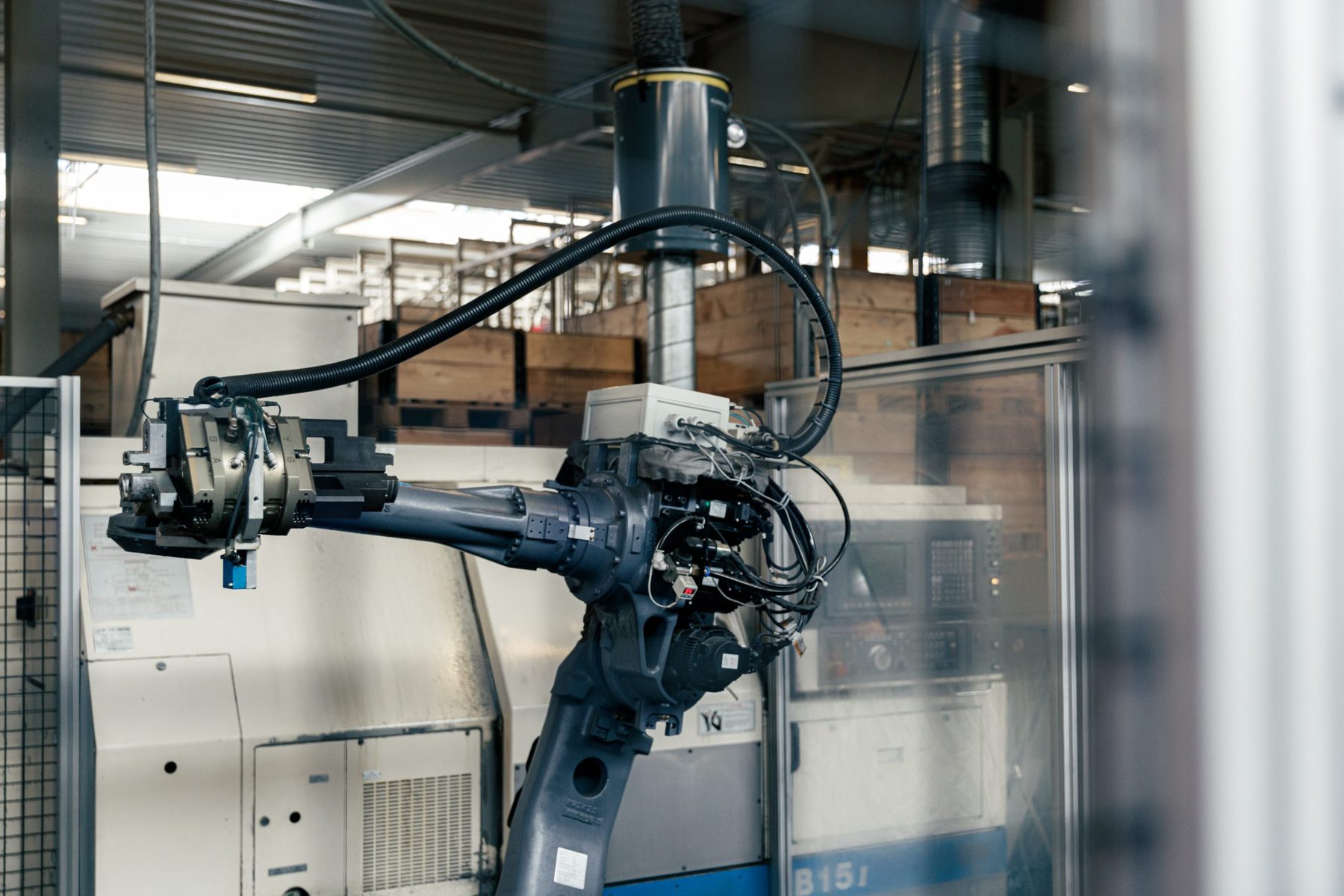
Operating environment: motion as part of the requirement
Robot cells and automation equipment often work in industrial environments with dust, oil mist and constant motion, but unlike many other industries, the motion itself is part of the requirement specification: the part must accelerate and decelerate repeatedly every minute without wear or fatigue changing its accuracy over time.
Many automation components are placed close to other equipment on a production line, where space is a limited resource. This demands that weight and geometry be optimised without compromising stiffness, because a part that is too compliant produces vibration and imprecise movement in a robot cell built for speed.
Automation equipment built for several identical machines must perform identically from day one across all installations, whether it sits in a clean laboratory or a dusty production hall. We take this into account in our choice of finish and fit, so that the component does not depend on a particular operating environment to function correctly.
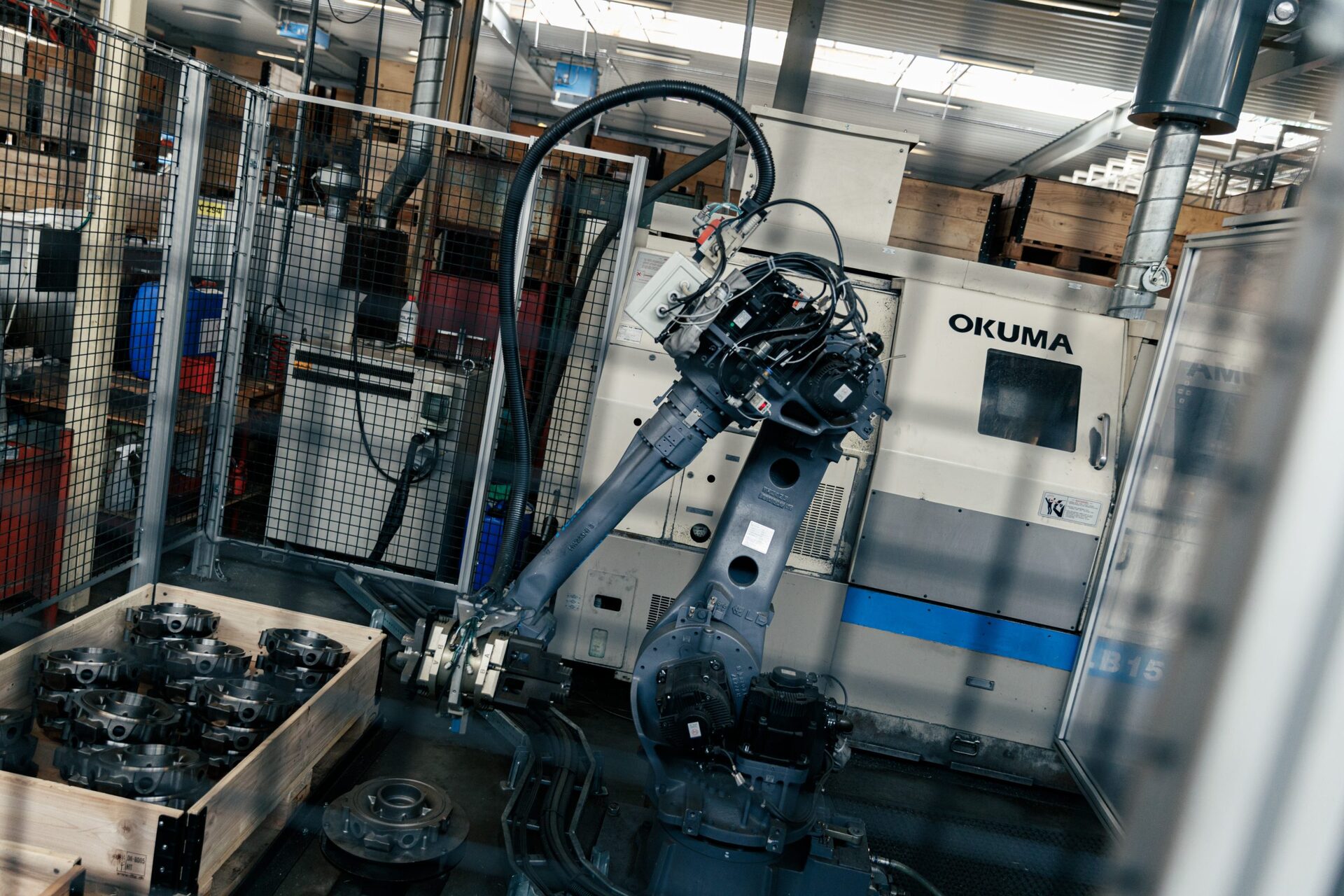
Materials balanced between weight and strength
We machine aluminium, steel and engineering polymers for automation parts, and the choice of material depends largely on whether the part moves or remains fixed. Aluminium is often used for moving parts, where low weight reduces the load on motors and drive systems, while steel is used for parts that must maintain stiffness and withstand repeated impacts from gripper functions.
Engineering polymers such as POM and PA are used for wear surfaces and sliding parts, where self-lubricating properties reduce the need for external lubrication, an advantage in automation equipment that must run for a long time between services. We know how to machine these materials, including how clamping force and cutting data need to be adjusted to avoid deformation.
For parts exposed to repeated impacts, such as grippers and stop blocks, we choose materials and any hardening that provide fatigue strength without making the part unnecessarily heavy. The balance between strength and weight is often the most important design decision on a moving automation part, and we readily advise where we see that a simple material change can produce a lighter part without loss of durability.
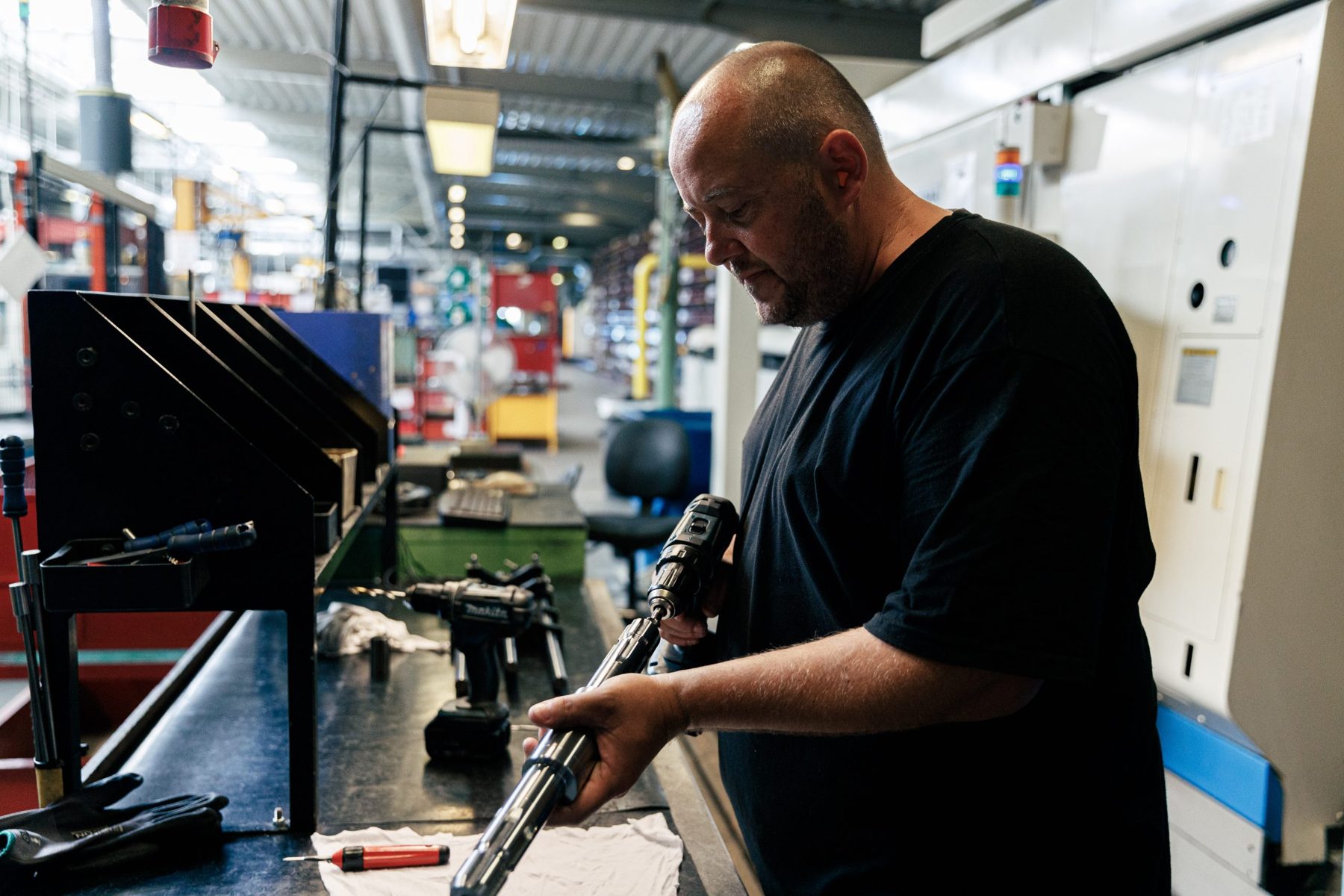
Tolerances and reproducibility across machines
Automation parts that are to be built in several identical copies for several identical machines require reproducibility just as much as tight tolerance on the individual part. A machine builder building ten identical cells needs part number ten to fit just as well as part number one, without individual adjustment at each installation.
Fits for bearings, guides and drive systems must be tight enough to avoid play, but not so tight that friction increases and movement becomes uneven. We work with the tolerances specified for the particular bearing or guide type, and we document the critical fit dimensions so that the customer can verify them at incoming inspection.
Positioning of several mounting holes in a plate or bracket often needs to match another part, a motor, a gear or a sensor, with an accuracy that makes assembly possible without forcing the parts into place. We check positional deviations on 3D measuring equipment to ensure that the overall geometry, not just the individual holes, holds tolerance.
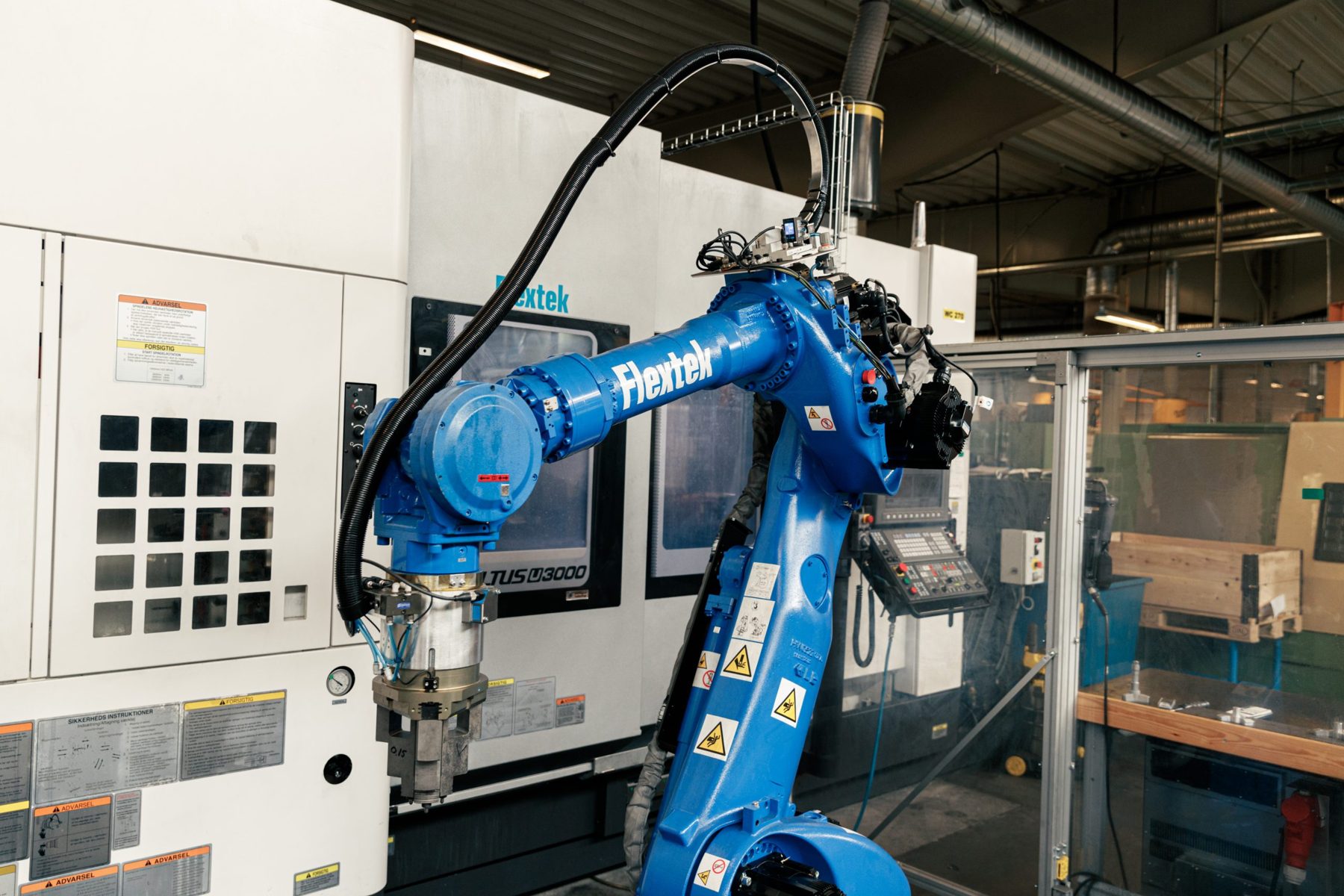
Wear through millions of cycles
Moving parts in a robot cell are subjected to a very large number of cycles over their service life, often several million movements a year. Even a small degree of wear per cycle therefore accumulates quickly into noticeable play, and we choose finish, material and any surface treatment with the accumulated load in mind, not just the individual movement.
Grippers and actuators that handle parts directly are exposed to repeated impacts at each gripping operation. We machine these parts in materials that withstand fatigue, and we deburr and finish contact surfaces so that a sharp edge does not become the starting point for a crack after many thousands of cycles.
We continuously see wear data on returned parts from customers running large numbers of automation cells, and we use that experience to adjust material, finish or geometry for future series of the same part. This produces a component that improves over time, rather than remaining unchanged even though operating experience points to a weakness.
- ISO 9001 certified quality management since 2015
- 3D measurement of parts and measurement reports as documentation
- Non-disclosure agreement, secure drawing storage and role-based access
- Confidentiality around machine designs and customer know-how
If you have questions about this content, please contact us at salg@rmfintech.dk.
Documentation that can be reused from machine to machine
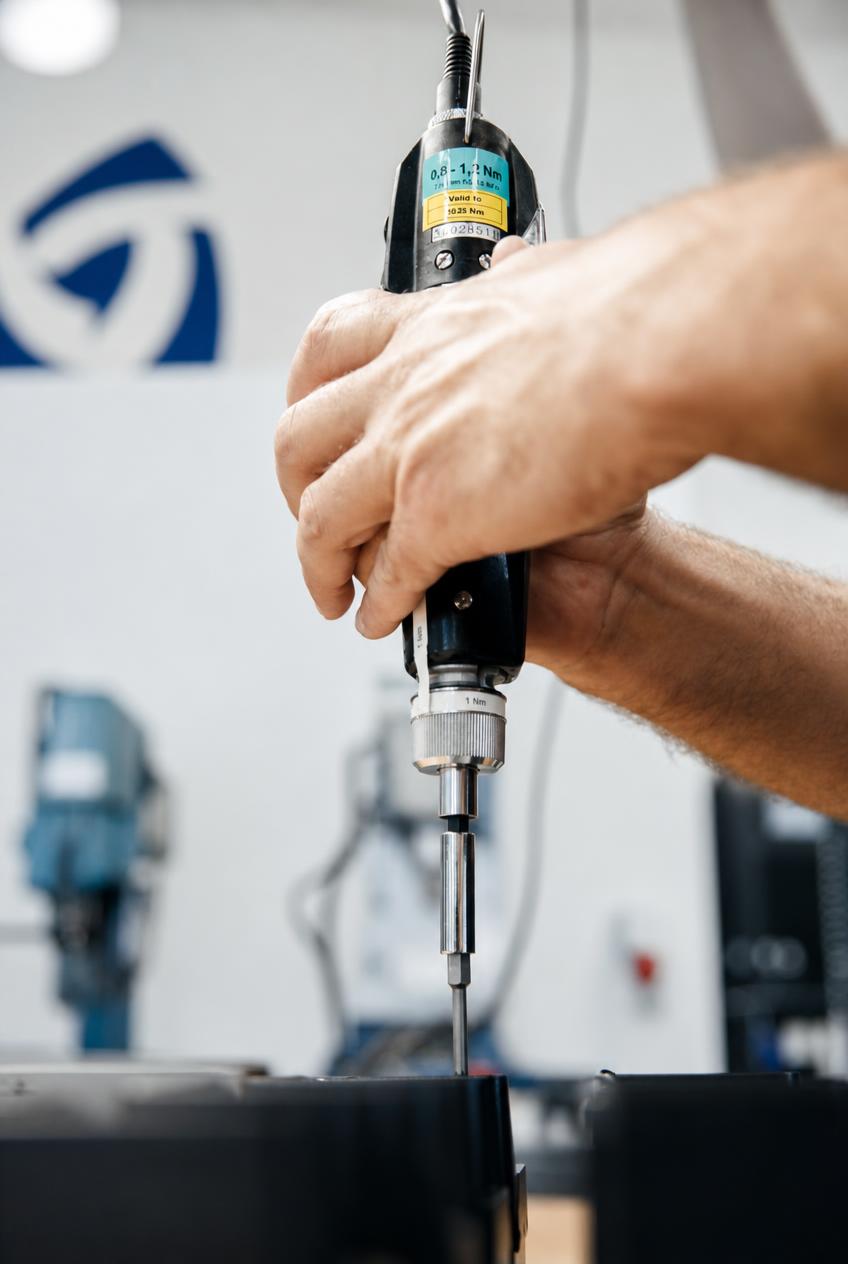
Automation equipment built for several customers or several industries often requires documentation that can be reused from machine to machine, rather than unique documentation per part. We adapt the level of documentation accordingly, with measurement reports on the critical dimensions and a fixed measurement plan that follows the component throughout its production life.
For machine builders supplying regulated industries such as medical devices or food production through their automation equipment, traceability requirements can be stricter than in general machine building. We can supply material certificates and full traceability at batch and component level where this is part of the requirement specification from the machine builder's own customer.
Reproducibility is documented through archived programs and measurement plans, so that a machine builder can prove to their own customer that part number two hundred has been produced with the same process as part number one. It is often precisely this documentation that makes the difference when a machine builder itself needs to be certified for a new industry.
Series production and the aftermarket
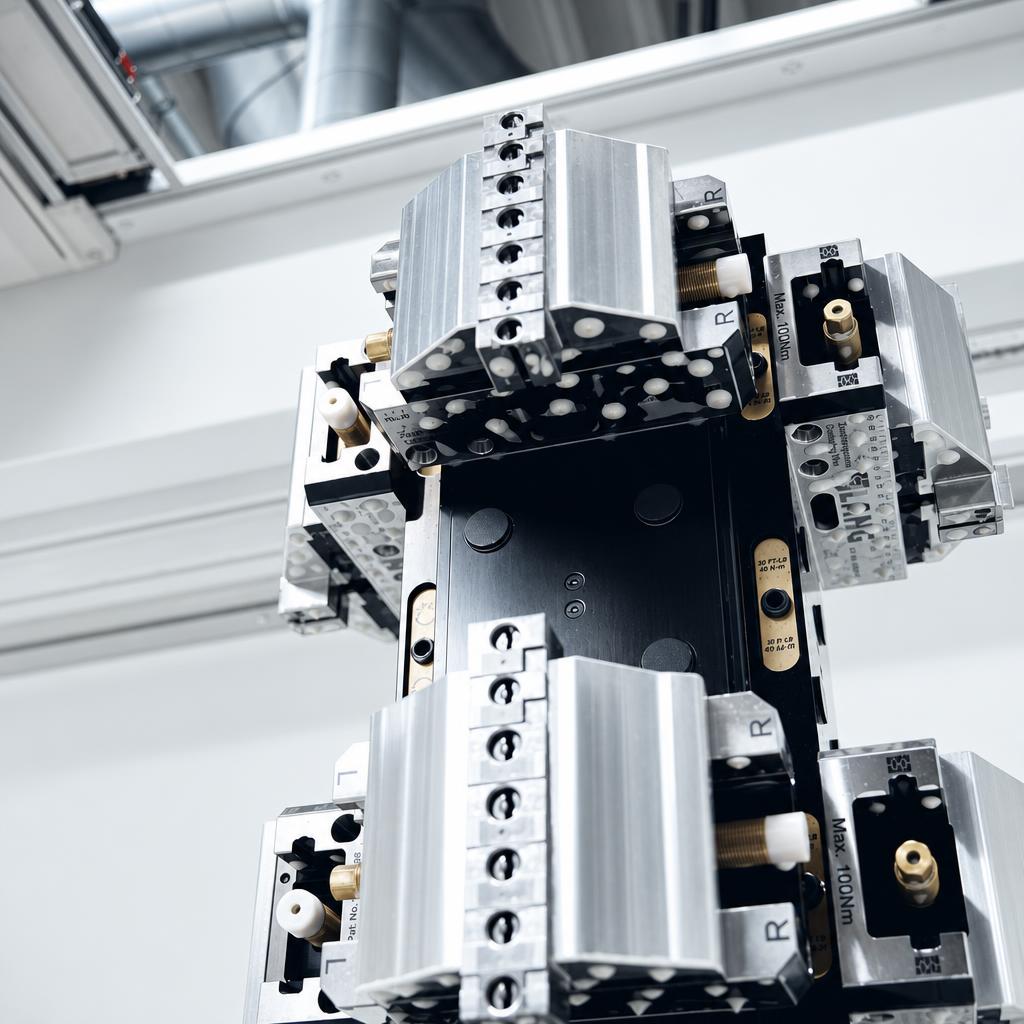
Automation equipment is often developed quickly, with several design iterations before the construction is ready for series production. We can take the first prototypes through quickly and follow the design through changes, and once the design is frozen, we move production to a setup built for the current quantity, without the customer having to find a new supplier halfway through.
When a machine builder scales from a few cells to many, we can bring forward capacity on our automated setups without compromising the reproducibility already established in the smaller series. This turns scaling into a matter of planning rather than reinventing the process.
Automation equipment often has a long service life in production facilities, where wear and spare parts are in demand for many years after the original machine was built. We archive programs and fixtures, so that a spare part for an older cell can be produced identically to the original, without the machine builder having to redesign the part from scratch.
Collaboration and confidentiality
A machine design is often at the heart of a machine builder's competitive advantage, and we treat that knowledge with the same confidentiality we would expect ourselves. A confidentiality agreement is entered into as standard, drawings and models are stored with role-based access, and we do not reuse a customer's specific solution in another customer's machine.
We readily get involved in the design phase together with the customer's engineers, while the cheapest changes can still be made: a changed fixturing surface, a tolerance relaxed in one place against one tightened in another, or a material change that lightens a moving part. The decision always rests with the customer, but input from the production side comes early in the process.
For machine builders building several generations of the same basic concept, we retain the knowledge we build up about that specific machine family, fixtures, cutting data and measurement plans, so that collaboration becomes more efficient with each new generation, without the customer having to start over explaining the requirements.
Shall we produce something for your company?
Send us your drawing and we will come back with a technical assessment and a quotation. We accept electronic drawings in most formats and treat all material confidentially.