
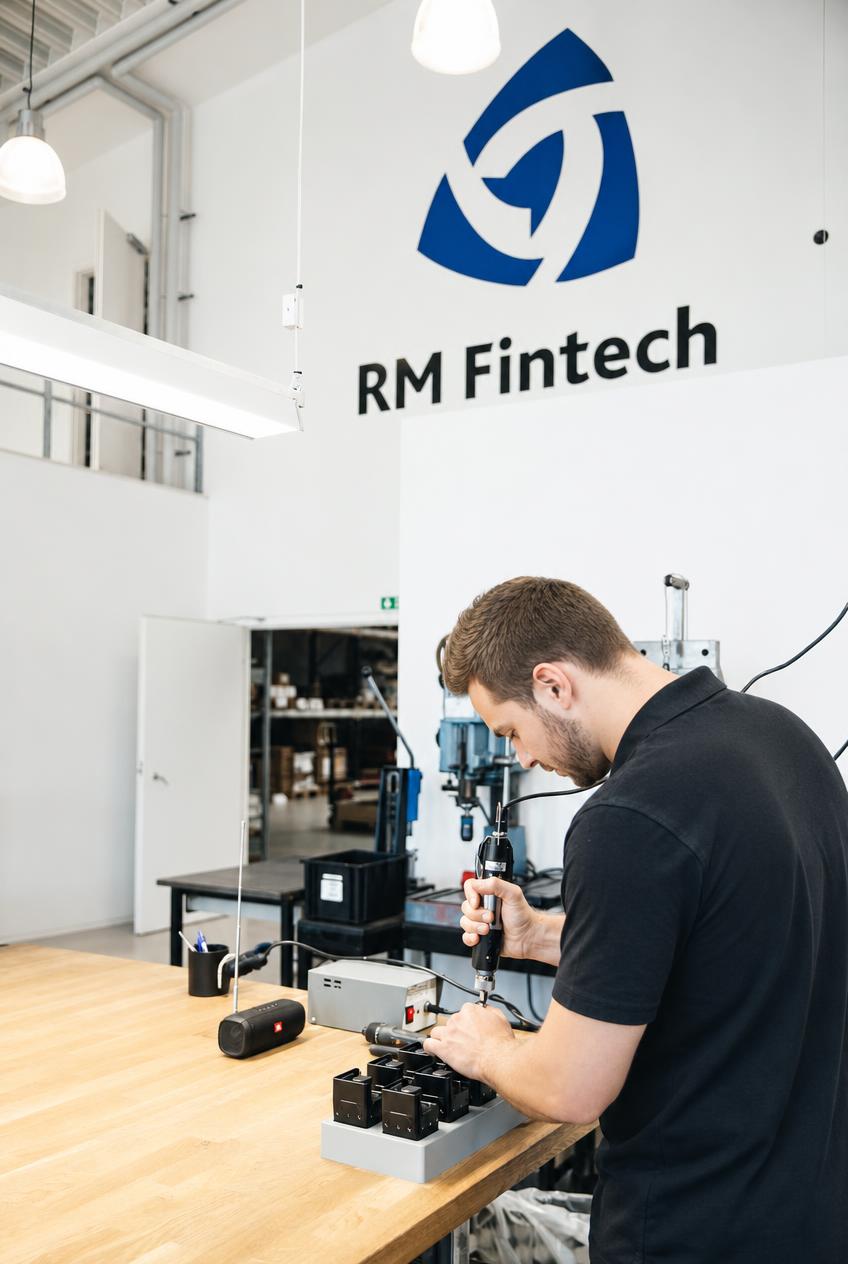
Assembly worker
Sub-assembly and final assembly of fine mechanical components in our new assembly department.
About the position
You will join our assembly department, where we assemble fine mechanical components into sub-assemblies and finished products for customers in demanding industries.
The work requires precision and care, and you will work closely with both production and quality control.
We expect
- Experience with fine mechanical assembly or similar craft work
- Thoroughness and attention to detail
- Ability to work from work instructions and drawings
We offer
- A place in a new and growing department
- Thorough training in our processes
- Proper working conditions and good colleagues
Send your application and CV to salg@rmfintech.dk – mark the subject line with the job title. All applications are treated confidentially in accordance with our privacy policy.
Send application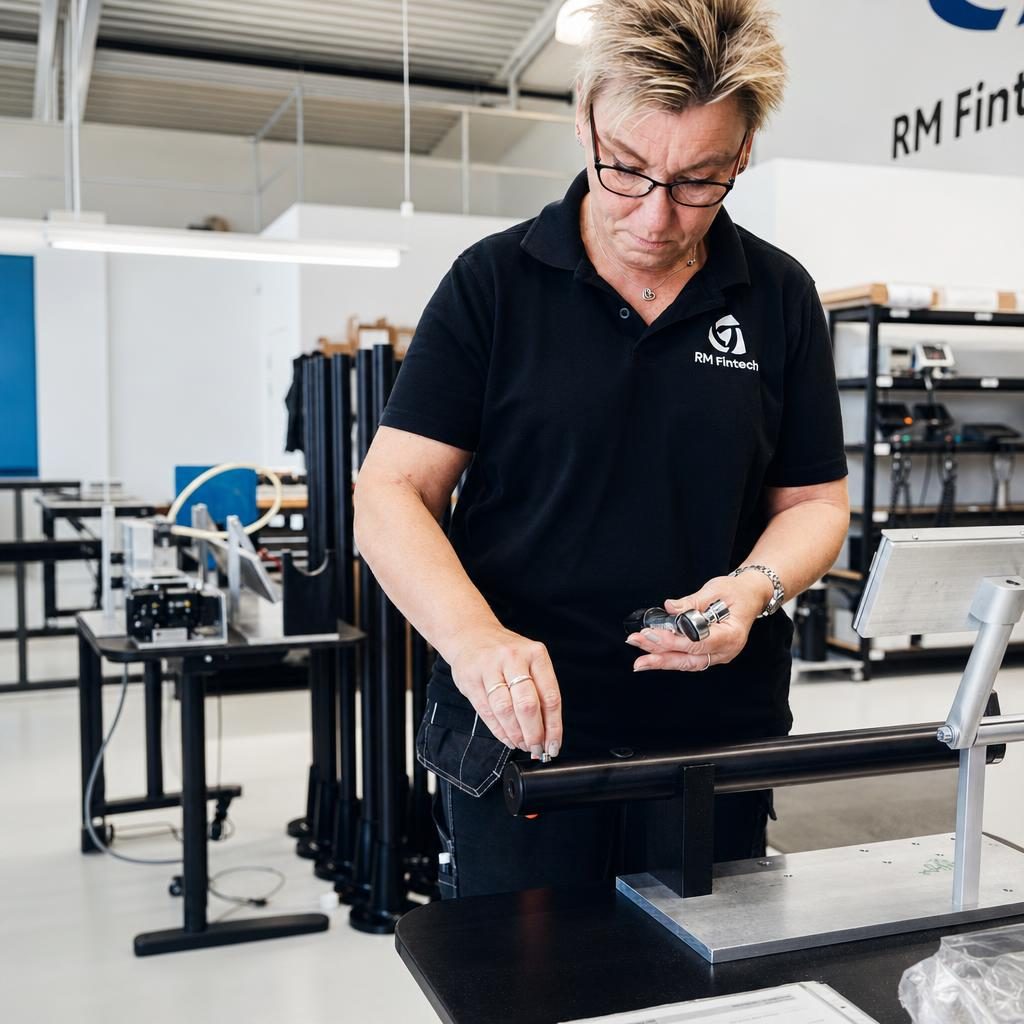
A day in the life of an assembly employee
As an assembly employee at RM Fintech A/S, you work on assembling sub-assemblies and components according to fixed assembly instructions, where sequence, torque and control points are precisely described for each task. The working day varies depending on which order is in production, but the requirement for precision and thoroughness runs through everything, whether the task is a smaller sub-assembly or a more complex assembled unit.
A large part of the work involves checking that the components arriving from machining meet the expected quality before they are included in an assembly, and subsequently documenting that the assembly has been carried out correctly. Ongoing checks during the process are essential to avoid a defect being discovered only when the finished assembly is due for delivery.
Collaboration with colleagues from other parts of production is close, because assembly is often the last link before an order is ready for dispatch. This provides a natural understanding of how individual components have been produced and what requirements have applied during machining, which is useful when assessing the quality of what arrives at the assembly department.
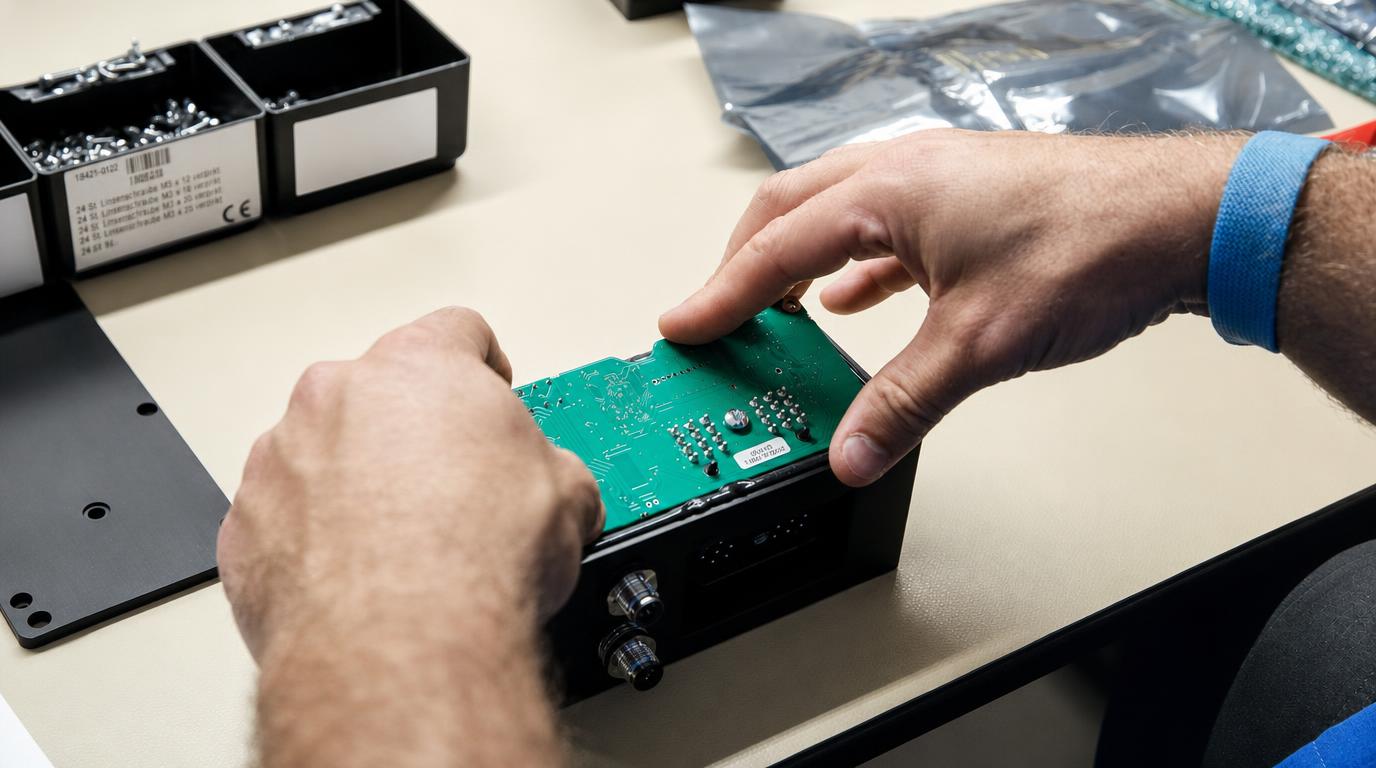
Training in the assembly department
New assembly employees are introduced to their tasks through side-by-side training, where an experienced colleague goes through the assembly instructions, tools and documentation before one works independently on a given sub-assembly. This applies both to employees with previous assembly experience and to employees who are new to the trade but have an interest in practical, detail-oriented work.
Training covers not only the assembly work itself but also the understanding of quality and documentation that is a fixed part of the task, including how deviations are identified and reported so they can be handled systematically. We place great emphasis on new colleagues understanding why the individual control points in an instruction exist, not just how they are performed.
The pace of training is adapted to the individual employee's background, so experienced assemblers can quickly become self-sufficient with our specific instructions, while new employees to the trade are given the time needed to build safe routine before more complex sub-assemblies are entrusted to them alone.
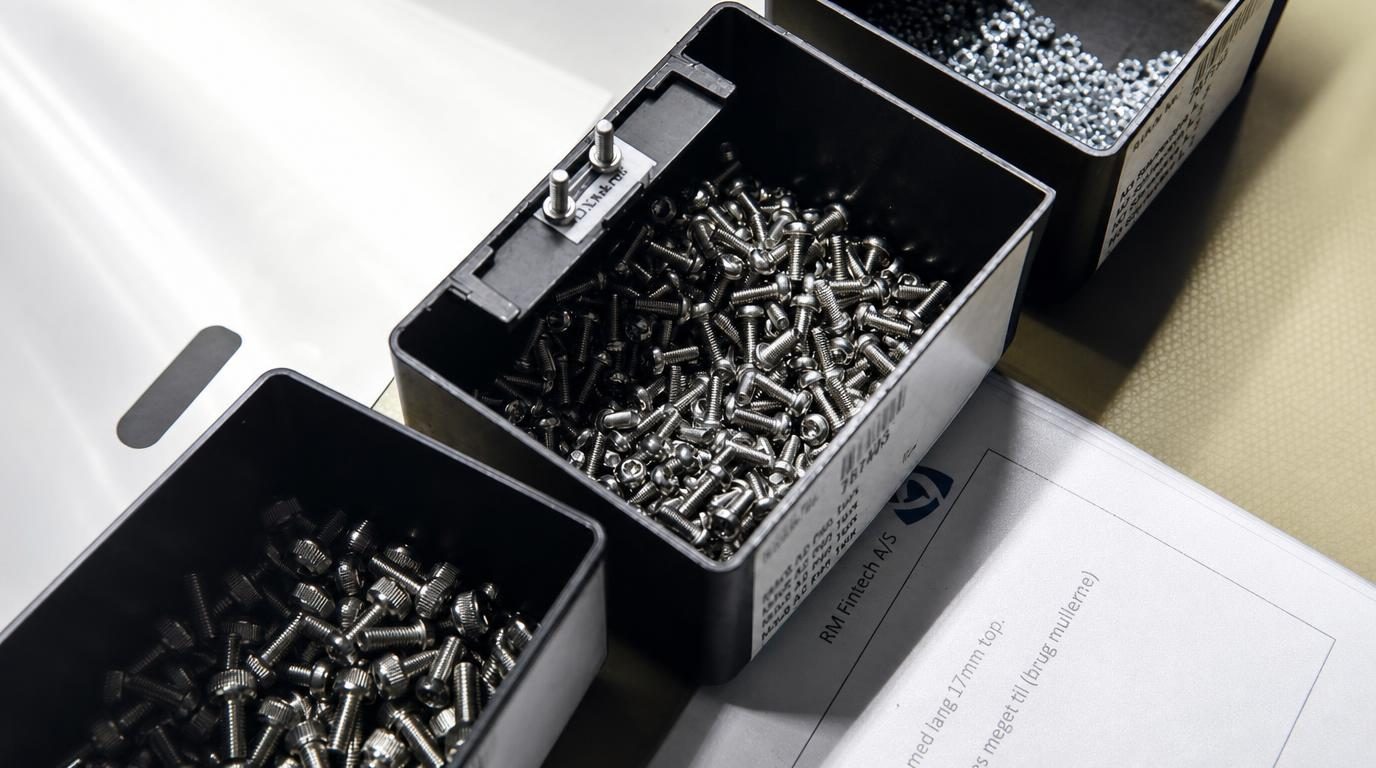
The nature and variety of the tasks
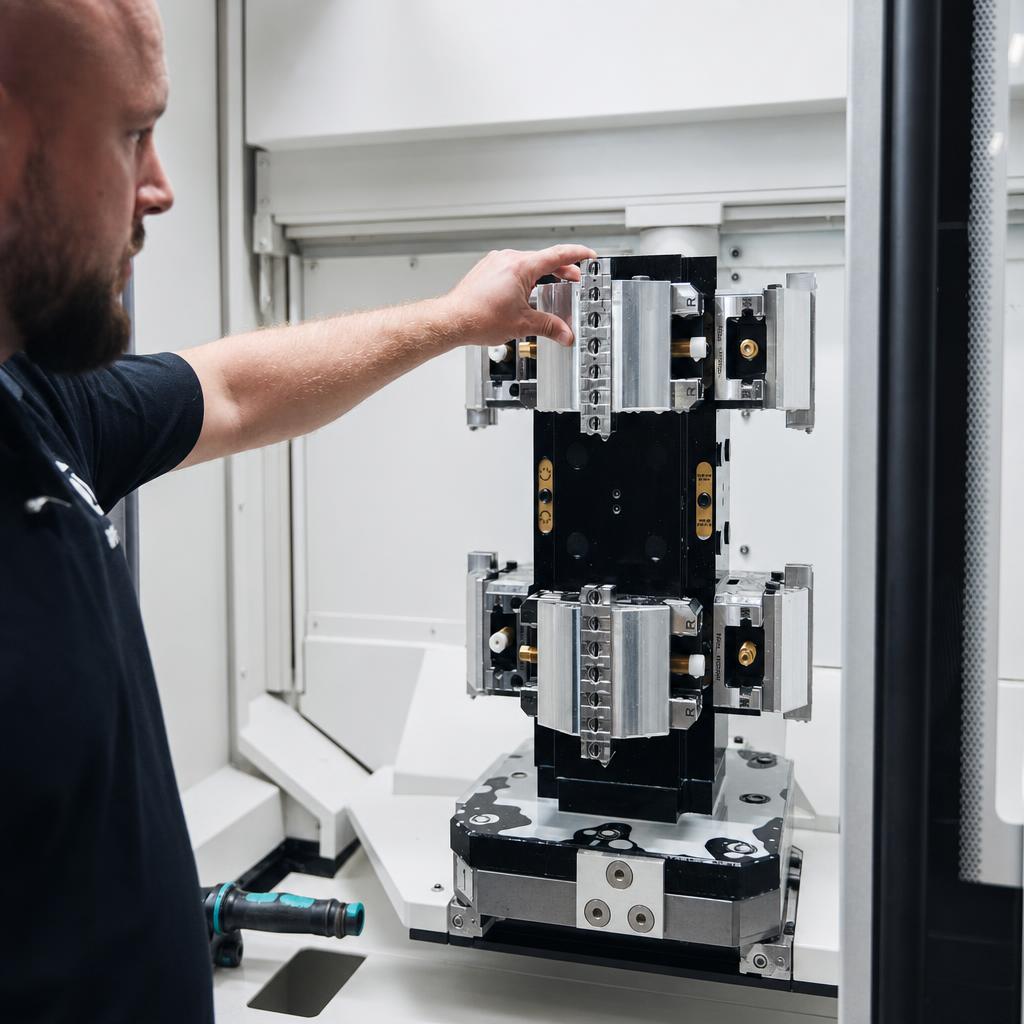
Assembly tasks range from relatively simple sub-assemblies with few components to more complex units where several components, sealing materials and, in some cases, electronic components must be assembled in a specific sequence. This variety means that, over time, an assembly employee builds experience with different types of tasks and customer requirements, rather than only working with one fixed type of assembly.
Some tasks place special demands on documentation and traceability, because they form part of products for industries such as defence or medical technology, where the origin and inspection result of every component must be documented. This requires thoroughness in recording during assembly, not just in the assembly work itself.
We are continuously working to expand the range of task types the assembly department can handle, as more customers request a combined solution from machining to finished sub-assembly. This gives assembly employees the opportunity to build broader experience over time, rather than being tied to a single type of task throughout their employment.
Quality and documentation in assembly work
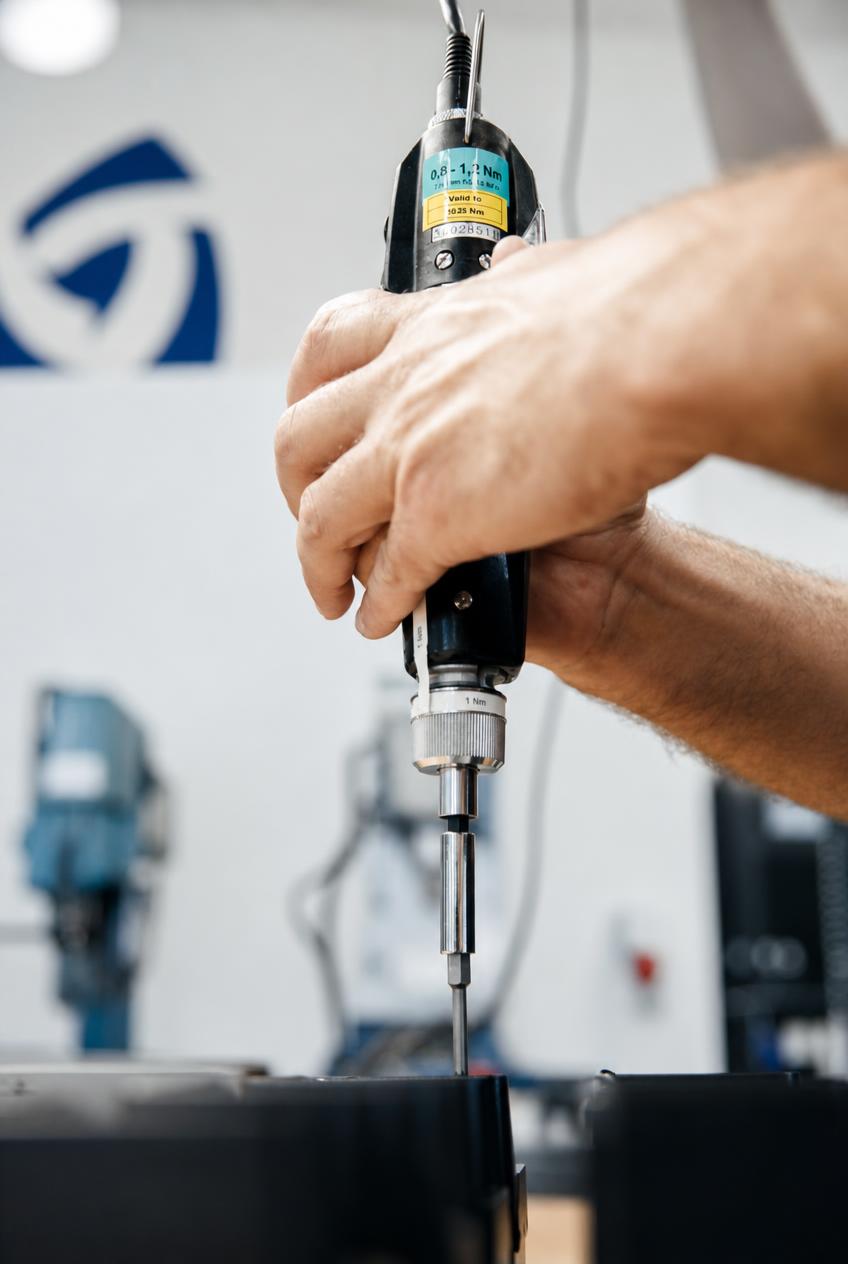
Quality in assembly work involves both assembling the components correctly according to the instructions and documenting that this has been done, so the sub-assembly can be traced through the entire process if questions arise later. This dual focus on both the practical work and documentation is a central part of what is expected of an assembly employee with us.
We work according to a certified quality management system that also covers the assembly department, meaning that deviations in assembly are handled systematically in the same way as deviations in machining. The purpose is to find the cause of a deviation and correct it, so the same error does not recur in a later order.
We encourage assembly employees to give feedback if an instruction is difficult to follow, or if there is a better tool or a better sequence for a given task. This kind of feedback from those who perform the work day to day is often the source of the improvements that genuinely make the process more robust.
Working environment in the assembly department
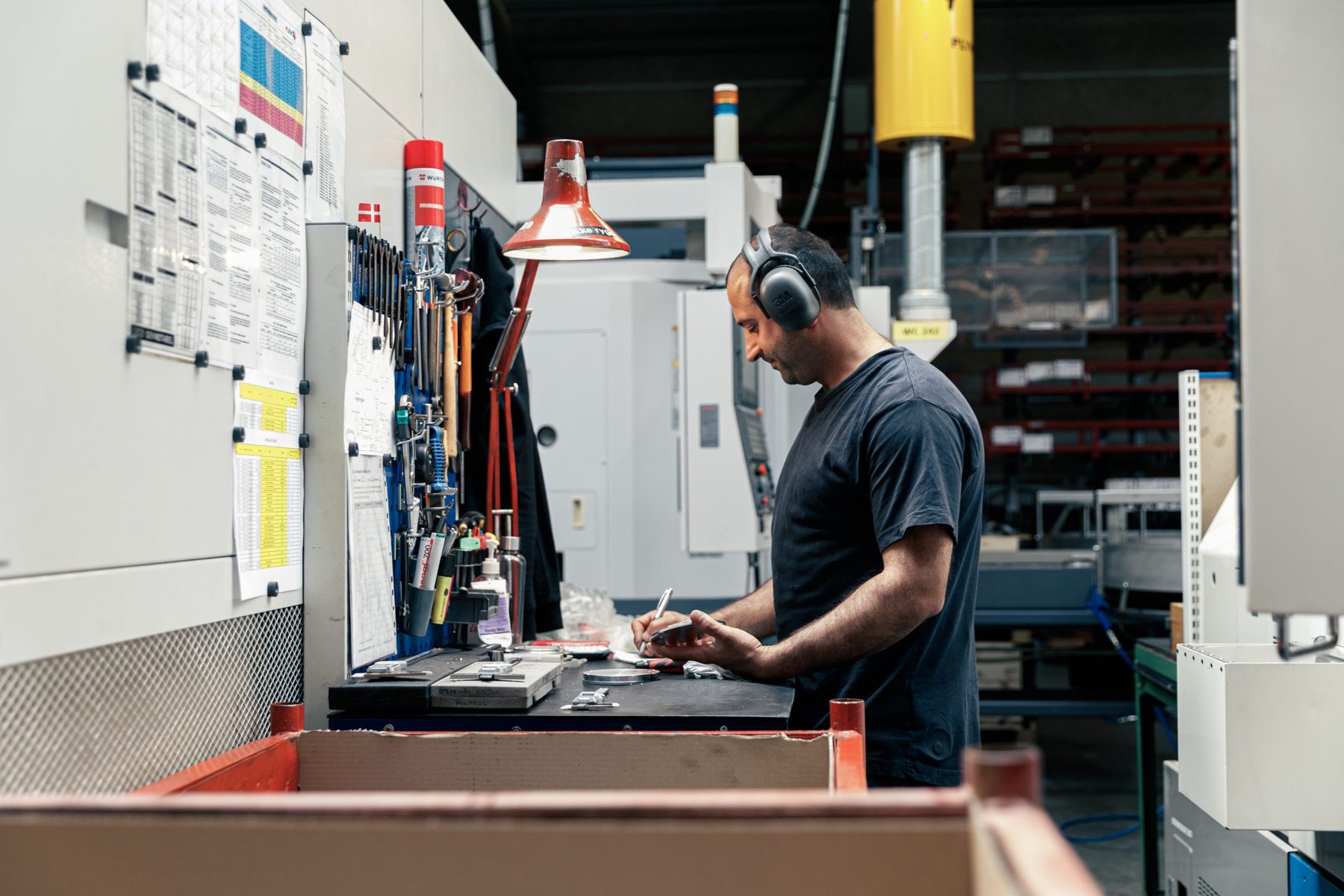
The assembly department is designed with a focus on ergonomics, including lifting aids and workstations adapted to the nature of the task, so that physically demanding working postures are reduced as much as possible. The goal is a workplace where one can maintain a high level of quality throughout the working day without unnecessary physical strain over time.
Safety and order in the workplace are a fixed part of daily life, including correct handling of tools and materials and clear procedures for how components are stored and transported between the individual steps of assembly. Introduction to these procedures is a fixed part of the training for all new employees in the department.
We place great emphasis on an open tone, where uncertainty about a task or an instruction can always be discussed with a colleague or a manager before work begins. This applies particularly to new or complex sub-assemblies, where early clarification can prevent errors that would otherwise only be discovered late in the process.
Development as an assembly employee over time
As an assembly employee, there are opportunities to develop as one builds experience with several types of tasks and possibly takes responsibility for training new colleagues in the department. Development happens gradually and is based on the individual's interest and the needs that arise as the assembly department grows.
We support relevant further training, for example in quality management or specific assembly techniques, when it matches both the employee's wishes and the company's needs. The decision is made on a case-by-case basis, according to what makes sense for the individual and for production as a whole.
For employees who stay in the assembly department over several years, the company's growth typically means broader areas of responsibility, including the opportunity to work with more complex sub-assemblies or participate in developing new assembly instructions as new tasks and customer types emerge.